

The Case for a Better Cooler
Why Cooler Choice Matters More on a Boat Than Anywhere Else
A cooler that performs flawlessly in a backyard can fall apart on a boat. Sun beats down from above and bounces off the water from below, salt air creeps into every hinge and latch, and the whole unit gets dragged across docks, slid over gunwales, and lashed down where it will spend the day being jostled. If you have ever opened a cooler at three in the afternoon to find a soup of half-melted ice and warm drinks, you already know why this decision matters.
Boating puts a unique kind of pressure on cold storage. On land, a cooler mostly sits still in the shade of a trunk or a picnic table. On the water, it is a working piece of equipment. It has to hold temperature through direct sun exposure, resist the corrosive effects of salt spray, survive being stepped on or used as an extra seat, and stay put when the boat leans into a swell. That is a different brief entirely from “keep the sodas cold at the tailgate,” and it is why the boating community has strong opinions about which coolers earn a permanent spot on deck.
The good news is that the market has responded. Rotomolded-style hard coolers with serious insulation are no longer rare luxury items, and even the value brands now build marine-specific lines designed around UV exposure, rust-resistant hardware, and easy-to-clean surfaces. The challenge is separating genuine capability from marketing language on a box.
That is exactly what this guide is for. We have broken down fourteen hard-sided coolers that show up again and again in boaters’ carts — premium icons like the YETI Tundra 45 and the Pelican 70QT Elite, value-heavy challengers like the RTIC lineup, marine staples from Coleman and Igloo, and two interesting outliers in the Lifetime 115 QT and the Ninja FrostVault 50 QT. Each one gets a full review block with features, honest pros and cons, and a clear answer to the only question that really matters: who should actually buy this?
Before we get there, a quick note on how we handle specifics. Capacity figures come straight from the product names, because those are the numbers you can verify. Everything else — ice retention, durability, weight, portability — is described in the practical, general terms that reflect how these coolers behave in real use rather than in a lab. If you are outfitting a whole vessel, you might also want to look at our guides to the best dry bags for boating and the best boating apps, since cold storage and dry storage tend to be planned together.
Ready to shop? Browse the full range of boat-ready coolers on Amazon and compare current options side by side.
Check Coolers on AmazonAt a Glance
Quick Comparison: Our Top Picks
Every cooler in this guide appears in the table below, in the order they are reviewed. Scan the “Best For” label to find the category that matches your boating style, then jump to the full review for the details.
Swipe to see more →
| # | Image | Product | Key Specs | Verdict | Where to Buy |
|---|---|---|---|---|---|
| 1 | |
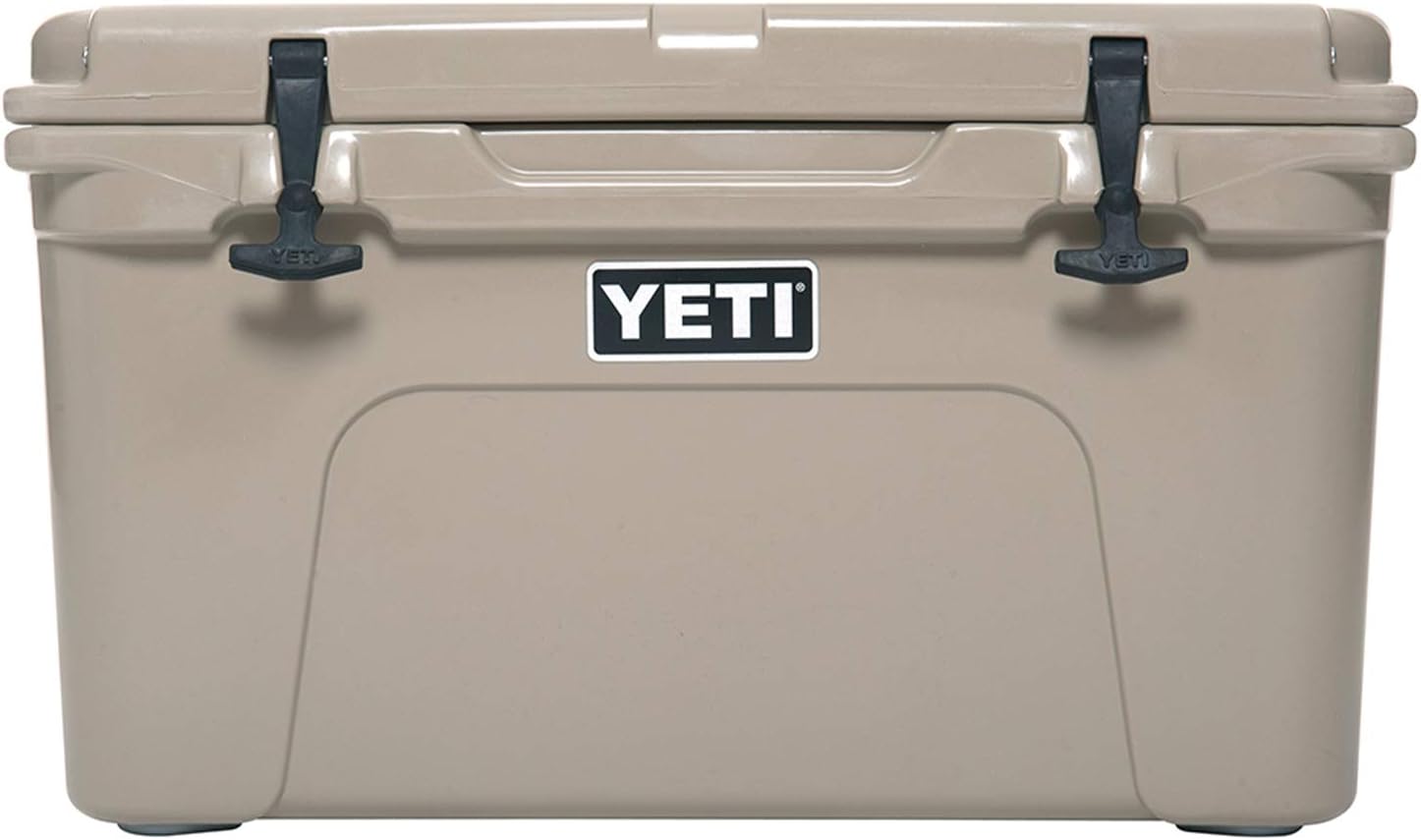
YETI Tundra 45Best Premium OverallTop Pick | 45 QT · Hard-sided · Rugged bear-resistant-class build · Excellent ice retention | The benchmark everyone else is measured against. | Check Price on Amazon |
| 2 |  |
ENGEL 60 QT Ultra-LightBest Lightweight High Capacity | 60 QT · Hard-sided · Lighter-weight construction · Strong ice retention | Serious capacity without the usual dead-lift workout. | Check Price on Amazon |
| 3 |  |
RTIC 65 QT Ultra-ToughBest Value Rotomolded | 65 QT · Hard-sided · Heavy-duty wall construction · Great capacity-to-price ratio | Premium toughness at a friendlier price point. | Check Price on Amazon |
| 4 |  |
RTIC Ultra-Light 52 QTBest Mid-Size Hard Cooler | 52 QT · Hard-sided · Reduced-weight design · Easy one-person carry | The sweet spot for weekend cruisers. | Check Price on Amazon |
| 5 |  |
RTIC 72 QT WheeledBest Wheeled for Docks | 72 QT · Hard-sided · Wheeled transport · Large-party capacity | Roll it down the dock instead of wrecking your back. | Check Price on Amazon |
| 6 | |
Pelican 70QT EliteBest Extreme-Duty | 70 QT · Hard-sided · Overbuilt protective construction · Secure latching | Built like equipment, not like a picnic accessory. | Check Price on Amazon |
| 7 |  |
Coleman Pro 45 QTBest Budget Premium | 45 QT · Hard-sided · Heavy-duty hardware · Practical day-trip size | Pro-level feel without the premium-tier price. | Check Price on Amazon |
| 8 |  |
Coleman Marine 52 QTBest Classic Marine Value | 52 QT · Hard-sided · Marine-oriented design · Familiar hinged-lid format | Old-school boating reliability, modern build. | Check Price on Amazon |
| 9 |  |
Coleman Marine 120 QTBest Large Capacity | 120 QT · Hard-sided · High-volume storage · Multi-day provisioning | When one cooler has to feed the whole crew. | Check Price on Amazon |
| 10 | 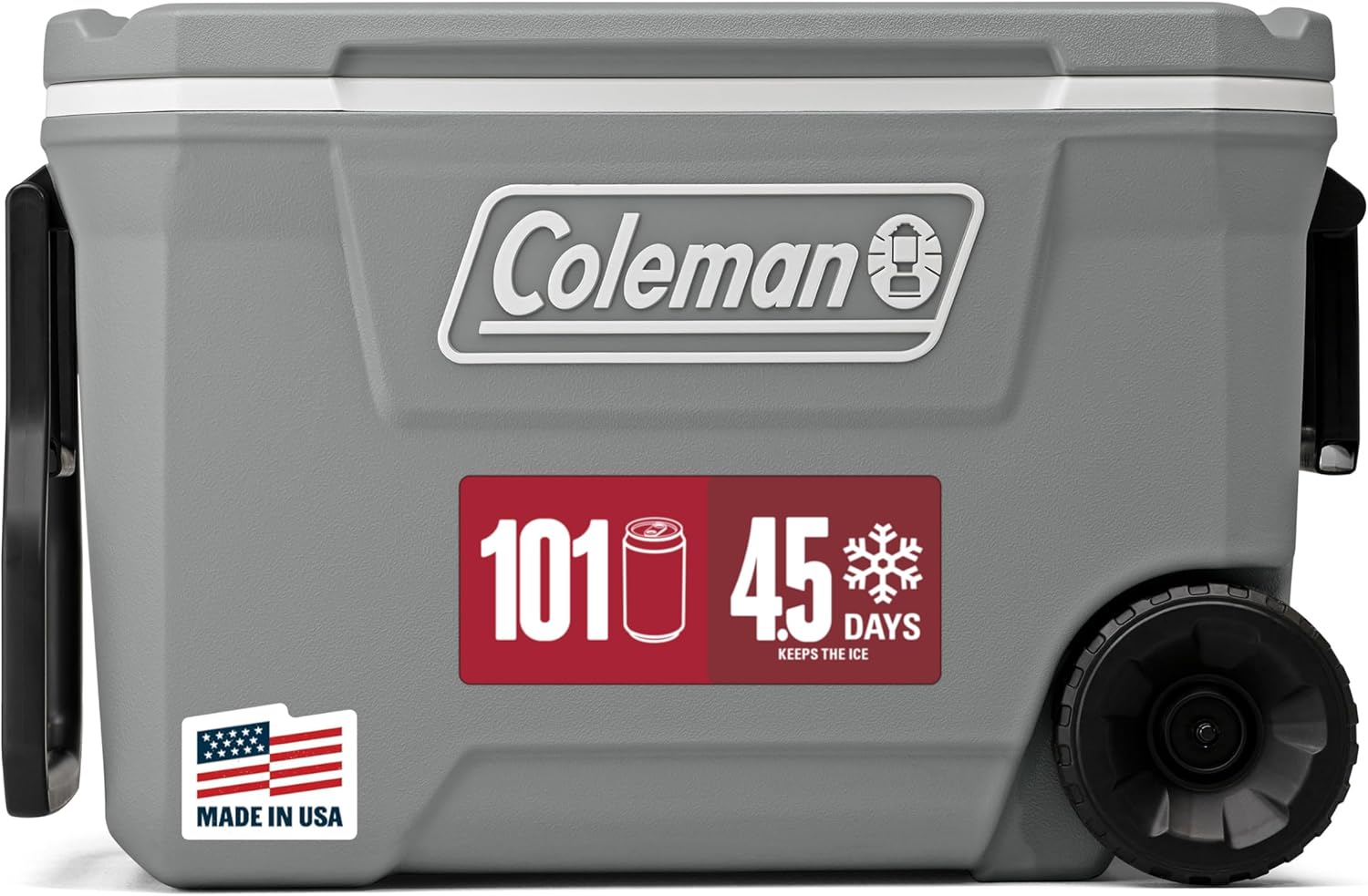 |
Coleman Classic 62 QT RollingBest Budget Rolling | 62 QT · Hard-sided · Wheeled transport · Everyday-family friendly | Roll-on, roll-off convenience for casual boaters. | Check Price on Amazon |
| 11 |  |
Igloo Marine 54 QTBest Sun-Ready Value | 54 QT · Hard-sided · Built with sun and salt in mind · Easy-clean interior | Made for the deck, priced for real life. | Check Price on Amazon |
| 12 |  |
Igloo Trailmate 50 QTBest All-Terrain Hauler | 50 QT · Hard-sided · All-terrain mobility · Dock-to-beach ready | Where the wheels matter as much as the ice. | Check Price on Amazon |
| 13 |  |
Lifetime 115 QT Hard CoolerBest Budget Big Cooler | 115 QT · Hard-sided · High-volume capacity · Value-focused build | Maximum storage per dollar, hands down. | Check Price on Amazon |
| 14 |  |
Ninja FrostVault 50 QTBest Organization | 50 QT · Hard-sided · Separate dry zone · Smart internal layout | Dry snacks stay dry — a genuinely clever idea. | Check Price on Amazon |
Want to compare live prices? Open the full boat cooler selection on Amazon and filter by the capacity you need.
Check Coolers on AmazonWhat Makes a Cooler “Marine-Ready”? The Criteria That Actually Matter
Before spending a single dollar, it pays to understand what separates a cooler that merely works from one that works on a boat. The differences are not subtle, and once you know what to look for, you will see them everywhere in the product descriptions — and, more importantly, you will spot the gaps.
Insulation performance is the whole game
Everything else is secondary to how long your ice lasts. Thicker walls and tighter-fitting lids are the two biggest physical drivers of ice retention, and the premium coolers in this guide are noticeably chunky around the perimeter for exactly that reason. On a boat, you get an extra challenge that backyard users never face: radiant heat from both above and below. Sunlight hits the lid directly, and the reflective water surface throws additional energy at the sides. A cooler that keeps ice for a weekend in the shade of a garage may only manage a long day in open water. If your trips run long, size up your insulation expectations accordingly.
Corrosion resistance is not optional
Salt air is quietly destructive. It attacks metal latches, hinges, handles, and any exposed hardware. Marine-oriented coolers typically account for this with hardware selected for rust resistance and with latch systems designed to shed water rather than trap it. If you boat in saltwater, give this more weight than almost any other feature. A cooler with a beautiful finish but a latch that seizes after one season is not a bargain at any price.
Securing the cooler on deck
A loose cooler on a moving boat is a hazard. It slides, it blocks walkways, and in a sudden stop it becomes a heavy projectile. Look for tie-down points or a flat, stable footprint that plays nicely with deck straps. This is one of those details that rarely appears in feature bullet points but decides whether a cooler lives on your boat or gets left in the garage after two trips. Pairing your cooler with proper safety gear matters too — if you are still sorting out life jackets, our guide to the best life jackets for adults for boating covers the essentials.
Portability versus capacity: pick your compromise
Big coolers hold more, but they also weigh more when full, and boats are full of awkward lifting scenarios — down a ramp, across a floating dock, over a gunwale, down into a cabin. Wheeled models solve the dock problem beautifully, but wheels add bulk and can complicate stowing. Two-piece setups (one medium cooler for drinks, one small one for bait or food) often beat a single oversized unit. Match the cooler to the crew size, not to the fantasy trip.
Interior layout and cleanup
Drainage is the unsung hero of cooler design. A well-placed drain lets you empty meltwater without tipping a fully loaded cooler — a genuinely miserable task on a rocking deck. Smooth interiors clean faster and resist lingering fish or bait odors. And if you want to keep sandwiches and snacks out of the meltwater entirely, look at designs with separate dry compartments, which we will cover in detail later in this guide.
Shopping by feature? Search Amazon for marine coolers with the specific options you need.
Check Price on AmazonBest Premium Hard Cooler: YETI Tundra 45
If there is one cooler that defined the modern premium category, this is it. The Tundra line has become shorthand for serious cold storage, and the 45 QT size is arguably its most versatile expression — large enough for a full day of food and drinks for a small group, compact enough to stow in most boat layouts without staging a hostile takeover of the deck.
Review · Best Premium Overall
YETI Tundra 45
The reference point for the entire hard-cooler market — rugged, beautifully built, and engineered for exactly the kind of abuse boating dishes out.
What makes the Tundra 45 a perennial favorite on boats is not any single headline feature. It is the total package. The construction feels genuinely overbuilt in the hand — the kind of solidity that reassures you when it is lashed to a deck cleat in chop. The lid closes with a deliberate, sealed feel rather than a casual snap, which is exactly what you want when the air is hot and humid and every gap is an invitation for warm air.
The 45 QT capacity hits the practical sweet spot for day boating. It swallows a family-sized load of food and drinks without becoming a two-person lift. For anglers, it doubles as a serious catch cooler; for cruisers, it is a weekend-provisioning workhorse. And because the Tundra platform is so widely used, there is an entire ecosystem of accessories that fit it, from dividers to dry-goods trays to tie-down kits.
Key Features
- 45 QT capacity sized for day trips and small-group cruising
- Heavy-duty, rugged construction built to survive deck life
- Excellent ice retention thanks to thick insulated walls and a tight-sealing lid
- Secure latch closure that stays shut in motion
- Wide accessory compatibility across the Tundra ecosystem
- Interiors designed for straightforward cleaning after fish or bait duty
What We Like
- Genuinely exceptional build quality and finish
- Ice retention that holds up on hot, exposed decks
- Resale value and accessory support are unmatched
- Manageable size for one person to move when loaded
Keep in Mind
- Sits at the premium end of the price spectrum
- Heavier than the “ultra-light” class of coolers
- No wheels — long dock walks are a carry
There is also a softer argument for the Tundra 45 that matters more than spec sheets suggest: predictability. Because so many boaters use it, you already know how it behaves. You know how much ice to pack, how it fits in your layout, and how it handles a week of neglect in a garage. That kind of known quantity has real value when you are planning a trip and cannot afford a cold-storage surprise at sea.
Our top pick for most boaters. See the YETI Tundra 45 in detail and check today’s availability.
Check Price on AmazonBest Lightweight High Capacity: ENGEL 60 QT Ultra-Light
Here is the tension at the heart of every cooler decision: capacity is wonderful until you have to move the thing. Filled coolers are heavy, and boats are full of lifting — on and off trailers, down docks, over rails, into storage. The ENGEL 60 QT Ultra-Light attacks that problem directly, pairing a genuinely roomy interior with a lighter-weight construction philosophy that makes a real difference on moving day.
Review · Best Lightweight High Capacity
ENGEL 60 QT Ultra-Light Cooler
High-volume cold storage for boaters who want capacity without turning every load-in into a weightlifting session.
ENGEL has been in the cooler business long enough to understand what serious users actually complain about, and the answer is almost always weight. A loaded cooler is brutal to carry any distance, and the empty weight of the cooler itself is the one variable you can actually control. The Ultra-Light approach trims the dead weight of the shell while preserving the insulation performance that matters.
The 60 QT capacity makes this a strong candidate for multi-day provisioning. It is a cooler you can pack for a weekend trip — real food, real quantities of ice, and enough cold drinks for a crew — without needing a second unit. For boaters who cruise rather than day-trip, that kind of headroom changes how you plan meals.
Practical handling deserves a mention as well. Even a lighter cooler becomes awkward at full capacity, so the shape and grip points matter more here than on a stationary cooler. This is a design that rewards proper lifting technique and a good stow position — keep it low and centered on the boat, and it will behave beautifully.
Key Features
- 60 QT capacity suited to multi-day trips and larger crews
- Ultra-lightweight construction that trims empty-cooler weight
- Strong ice retention for long, hot days on the water
- Hard-sided shell that handles stacking and lashing
- Straightforward interior for fast cleanup
What We Like
- Noticeably easier to handle than same-size premium coolers
- Big enough to be a genuine multi-day solution
- Balances weight savings with real insulation performance
- Great fit for sailboats and smaller vessels where every pound counts
Keep in Mind
- Fully loaded, it is still a serious lift
- Larger footprint — measure your stow space first
- Not a wheeled design
One planning note for high-capacity coolers in general: bigger coolers reward good ice discipline. Pre-chill the cooler, use block ice as your base, and fill the remaining air space deliberately. A half-empty large cooler can actually underperform a fully packed medium one, simply because there is more warm air inside to defeat. We cover packing strategy in detail later in this guide.
Need capacity without the weight penalty? Take a closer look at the ENGEL 60 QT Ultra-Light.
Check Price on AmazonBest Value Rotomolded: RTIC 65 QT Ultra-Tough
Not everyone wants to pay premium-brand money for a cooler, and the RTIC 65 QT Ultra-Tough is the strongest counterargument to the idea that you must. This is a big, heavy-duty hard cooler that competes directly with the top tier on the fundamentals — toughness, insulation, and capacity — while landing at a price point that makes buying one feel less like an investment decision and more like a straightforward gear purchase.
Review · Best Value Rotomolded
RTIC 65 QT Ultra-Tough Cooler
Maximum cooler per dollar: heavy-duty construction, serious capacity, and a price tag that leaves room in the budget for the rest of your boating kit.
The first thing you notice about the 65 QT Ultra-Tough is the sheer amount of cooler you get. This is a large unit, and it is unapologetic about it. The walls are thick, the shell feels rigid and confident, and the whole thing has the character of equipment built to be used hard rather than displayed. For weekend boaters who load up once and go, that is exactly the right personality.
Capacity is the headline here. Sixty-five quarts is genuinely large — big enough to serve as the primary cold storage on a day boat with a healthy crew, or the drinks-and-food anchor of a multi-cooler setup. It also works beautifully as a dock-to-boat hauler: pack it at home, roll it to the launch, and you are provisioned for the day.
Where this cooler wins its comparison against premium rivals is simple arithmetic. The fundamentals — insulation thickness, closure security, structural toughness — are present and accounted for. The trade-offs live mostly in the details of finish and accessory ecosystems. If you are choosing between a fully loaded premium cooler and a tough, roomy RTIC plus a full tank of fuel, plenty of experienced boaters will take the latter.
Key Features
- 65 QT capacity ideal for groups and full-day provisioning
- Ultra-tough, heavy-duty shell construction
- Thick insulation for dependable ice retention
- Secure closure system for use in motion
- Strong capacity-to-price ratio in the premium-cooler class
What We Like
- Exceptional value against premium-tier competitors
- Roomy enough to be the only cooler you need for a day
- Tough, no-nonsense construction
- Doubles as a bench or step in a pinch
Keep in Mind
- Large and heavy, especially when full
- Requires a real stow plan on smaller boats
- No integrated wheels
Best bang for the buck in the big-cooler class. See the RTIC 65 QT Ultra-Tough and compare it against your current setup.
Check Price on AmazonThe RTIC Ultra-Light Family: 52 QT Hard Cooler and 72 QT Wheeled
RTIC’s Ultra-Light line takes the same value philosophy as the 65 QT and points it at a different problem: handling. These coolers are designed to be easier to live with — lighter to lift, simpler to move, and offered in two very different formats depending on how your day actually works. One is a compact, carry-friendly hard cooler. The other adds wheels and capacity for the dock-hauling crowd. Let’s look at each.
Review · Best Mid-Size Hard Cooler
RTIC Ultra-Light 52 Quart Hard Cooler
The all-rounder of the lineup — enough capacity for a real day on the water, light enough that one person can handle it without drama.
If the 65 QT is a statement of capacity, the 52 QT Ultra-Light is a statement of balance. This is the cooler that fits the widest range of boats and the widest range of boaters. It is roomy without being imposing, and its lighter-weight construction philosophy means that the empty-cooler penalty — the weight you pay before you have even added ice — is kept in check.
That matters more than it sounds. Boaters move coolers constantly: from the truck to the dock, from the dock to the boat, from the boat to the swim platform, and back again at the end of the day. Every one of those moves is easier with a cooler that is not fighting you. And when the cooler is easier to move, it gets packed and unpacked properly rather than being abandoned half-organized at the end of a trip.
Key Features
- 52 QT capacity — a true mid-size sweet spot
- Ultra-lightweight construction for easier lifting and transport
- Hard-sided insulation for dependable cold retention
- One-person-friendly handling when properly packed
- Versatile size that stows in most boat layouts
What We Like
- Genuinely manageable for one person
- Capacity that covers a full day without waste
- Lighter construction philosophy without feeling flimsy
- Great primary cooler for day boats and runabouts
Keep in Mind
- Not enough room for extended multi-day provisioning on its own
- Carry-only — no wheels
- Popular size, so stock can move quickly
Review · Best Wheeled for Docks
RTIC 72 QT Ultra-Light Wheeled Cooler
Big capacity plus wheels — the combination that turns a brutal dock carry into an ordinary walk.
Anyone who has hauled a loaded cooler down a long floating dock in the heat understands the appeal of wheels on a cooler. They are not a gimmick; they are an ergonomic intervention. The 72 QT Wheeled takes that idea and pairs it with genuinely generous capacity, producing a cooler that can provision a full crew and still get to the boat without a rescue operation.
The trade-off with wheeled coolers is always stow space. Wheels and handle hardware add structure, and on smaller vessels every inch matters. Where this cooler shines is on boats with a real cockpit or deck area — pontoons, cabin cruisers, larger center consoles — and in the launch-to-boat transit where the wheels do their best work.
Capacity-wise, 72 QT is a serious upgrade over a standard day cooler. This is the class of cooler you bring when the plan includes actual meals, a long afternoon of swimming, and a crew that will absolutely finish every drink you packed.
Key Features
- 72 QT capacity for large crews and long days
- Wheeled transport that takes the strain out of dock hauling
- Ultra-lightweight construction for its size class
- Hard-sided insulation for extended ice retention
- Deck-friendly footprint for larger vessels
What We Like
- Wheels make long dock carries genuinely easy
- Huge capacity for group outings
- Lighter-weight approach in a big-cooler format
- Excellent as a “provision once for the whole day” solution
Keep in Mind
- Bigger footprint — measure before you buy
- Wheels add some empty weight
- Overkill for two-person day trips
Mini Comparison: RTIC Carry vs. RTIC Wheeled
Swipe to see more →
| Model | Capacity | Transport | Best Scenario | Where to Buy |
|---|---|---|---|---|
| RTIC Ultra-Light 52 QT | 52 QT | Carry handles | Day trips on small-to-mid boats | Check Price on Amazon |
| RTIC 72 QT Wheeled | 72 QT | Wheeled + handle | Long docks, big crews, large vessels | Check Price on Amazon |
Carry or roll? Choose the RTIC Ultra-Light format that matches your dock and your crew.
Check Price on AmazonBest Extreme-Duty: Pelican 70QT Elite
Some boats live hard lives. Charter vessels, fishing boats that see daily use, workboats, expedition craft — environments where gear is not coddled and nothing survives on reputation alone. For those users, the Pelican 70QT Elite makes an immediate kind of sense. This is a cooler designed with the same protective instincts that made the brand’s equipment cases legendary: secure closure, structural toughness, and an overall sense that the contents are being defended rather than merely chilled.
Review · Best Extreme-Duty
Pelican 70QT Elite Cooler
Overbuilt in the best possible way — a cooler that treats your provisions like protected cargo.
The Pelican identity shows up immediately in the details. The closure system feels engineered rather than assembled; the shell has a rigidity that suggests it would shrug off being stacked under other gear; and the overall fit and finish communicates that this product was designed for professionals first and picnickers second. On a boat, that attitude pays dividends every single trip.
The 70 QT capacity puts it firmly in the large-cooler category. It is a provisioning-capable unit — the kind of cooler that handles a long weekend’s worth of food and drinks, or an entire day of fishing with a serious catch to bring home. The interior volume is generous, and the design gives you enough usable space that you can organize rather than simply pile.
Security of closure is where Pelican’s case heritage really earns its keep. On a boat in motion, a lid that stays sealed matters for more than ice retention — it keeps contents from becoming deck debris. Combined with a tough shell and hardware selected for demanding environments, the 70QT Elite is one of the few coolers here that feels genuinely overqualified for recreational use.
Key Features
- 70 QT capacity for serious provisioning and multi-day trips
- Overbuilt, protective construction in the Pelican tradition
- Secure, confident latching that stays shut under motion
- Excellent ice retention from thick insulation and a tight seal
- Designed for demanding, professional-grade environments
What We Like
- Tank-like durability and lid security
- Real capacity for extended trips
- Feels like equipment, not an accessory
- Confident choice for saltwater and rough use
Keep in Mind
- Substantial size and weight in this class
- Premium-tier pricing
- More cooler than casual day-trippers need
It is worth noting that heavy-duty coolers like this reward good mounting discipline. A cooler this tough, left unsecured in a sudden stop, is a very hard object moving very fast. Take the extra minute with your tie-downs — and while you are thinking about safety, it is worth reviewing what to do when the weather turns, starting with our guide to what to do if you’re caught in severe weather while boating.
For gear that has to survive anything. Explore the Pelican 70QT Elite and see why pros trust it.
Check Price on AmazonThe Coleman Mid-Size Pair: Pro 45 QT and Marine 52 QT
Coleman has been part of American outdoor life for generations, and there is a reason the brand keeps showing up at marinas: it understands practical, affordable gear. These two models represent two different design philosophies within the same house. The Pro 45 QT reaches upward, borrowing the heavy-duty cues of the premium class. The Marine 52 QT looks sideways, at the specific demands of the boating environment. Both deserve attention.
Review · Best Budget Premium
Coleman Pro Heavy-Duty 45 QT Cooler
Heavy-duty hardware and a tough build at a price that feels like a pleasant surprise.
The “Pro” designation here is doing real work. This cooler is built with heavier-duty hardware and a more robust overall feel than the average casual cooler, and it is immediately noticeable in the details — the closure, the handles, the general rigidity of the shell. It is clearly aimed at people who use their cooler as a tool.
At 45 QT, the capacity mirrors the day-trip sweet spot that the YETI Tundra 45 occupies, which makes direct comparison natural. The Coleman Pro is not chasing premium-tier refinement; it is chasing practical toughness at an accessible price. For many boaters — especially those who get out on weekends and want gear that simply works — that is the correct trade to make.
Key Features
- 45 QT capacity sized for day trips and small crews
- Heavy-duty hardware and reinforced construction
- Hard-sided insulation for reliable everyday ice retention
- Practical format that stows easily on most boats
- Approachable price for the build quality offered
What We Like
- Heavy-duty feel without the premium-tier price
- Manageable, day-trip-friendly size
- Recognized brand with solid support
- Great “first real cooler” for new boat owners
Keep in Mind
- Less capacity than the large-cooler class
- Not a wheeled design
- Fewer premium refinements than the top tier
Review · Best Classic Marine Value
Coleman Marine 52 QT Cooler
A purpose-built marine cooler at a family-friendly price — the classic marina staple, updated.
The Marine line is Coleman’s direct answer to the boating environment, and the 52 QT is its workhorse size. This is the cooler format that generations of boaters grew up with: a hinged lid, straightforward access, and a shape designed to sit on a deck or a transom and just do its job all day.
What distinguishes a marine cooler from a generic one is the set of problems it anticipates. Sun exposure, moisture, salt, and constant movement. Marine-oriented designs account for these with materials and hardware selected to hold up in exactly those conditions, and with an interior that can be cleaned quickly after a day of fish, bait, ice, and spilled drinks.
The 52 QT size is a genuinely useful one. It is the capacity that comfortably covers a family day on the water — lunch, snacks, and drinks for everyone — without becoming a two-person carry. It is also the size that fits in the widest range of boats, which is why you see it everywhere from small runabouts to large pontoons.
Key Features
- 52 QT capacity for family-sized day-trip loads
- Marine-oriented design built with sun, salt, and moisture in mind
- Classic hinged-lid access for quick grabs on deck
- Easy-clean interior for post-trip turnaround
- Excellent value in the marine-cooler category
What We Like
- Genuinely designed for the boating environment
- Great capacity-to-price ratio
- Familiar, proven format
- Wide availability and easy replacement
Keep in Mind
- Not in the premium ice-retention class
- Hinged lid limits some packing configurations
- Basic feature set by design
Mini Comparison: Budget Premium vs. Premium Class
Swipe to see more →
| Model | Capacity | Design Focus | Best Scenario | Where to Buy |
|---|---|---|---|---|
| Coleman Pro 45 QT | 45 QT | Heavy-duty hardware | Affordable toughness for day trips | Check Price on Amazon |
| Coleman Marine 52 QT | 52 QT | Marine environment | Family day boating on a budget | Check Price on Amazon |
| YETI Tundra 45 | 45 QT | Premium build & ice retention | Buy-it-for-life boating gear | Check Price on Amazon |
Smart money in the mid-size class. Compare the Coleman Pro 45 QT and Marine 52 QT side by side.
Check Price on AmazonGoing Big: Coleman Marine 120 QT and Classic 62 QT Rolling
Not every cooler problem is a capacity problem, and not every cooler problem is a portability problem. Sometimes you need sheer volume for a big crew or a long trip. Sometimes you need to move a moderate load across a parking lot, a ramp, and a dock without engineering assistance. These two Colemans answer those two very different questions.
Review · Best Large Capacity
Coleman Marine 120 QT Cooler
The big one — high-volume cold storage for big crews, long days, and serious provisioning.
There is a category of boating day where a normal cooler simply cannot do the job. The whole family is coming. Friends are joining. There will be real food, not just snacks, and the plan is to stay out from morning until the sun goes down. For days like that, the 120 QT exists.
Volume is the entire story here. This cooler swallows an enormous amount of ice, food, and drinks, and it lets you organize the load sensibly — drinks on one side, food on the other, ice distributed for even cooling. It is the kind of cooler that becomes the center of the deck, the place everyone gravitates toward, and the reason nobody has to make a run back to shore for supplies.
With great capacity comes great responsibility, though. A cooler this large is heavy when full, and it needs a real stow plan. It belongs on boats with genuine deck or cockpit space, and it benefits enormously from being positioned low and secured properly. Fill it strategically — heavy items at the bottom, ice distributed through the load — and it will perform exactly as intended.
Key Features
- 120 QT capacity for large crews and extended outings
- Marine-oriented build for sun and salt exposure
- High-volume interior that supports organized packing
- Hard-sided insulation for all-day cold storage
- Ideal as a boat’s primary provisioning cooler
What We Like
- Enormous capacity for group boating
- Marine-specific design cues
- Reduces or eliminates the need for multiple coolers
- Strong value in the large-capacity class
Keep in Mind
- Very heavy when fully loaded
- Demands real deck space
- Overkill for small crews and short trips
Review · Best Budget Rolling
Coleman Classic 62 QT Rolling Cooler
Familiar, affordable, and wheeled — the easy-button option for casual boating days.
Not every cooler needs to be a fortress. Some just need to hold a good amount of food and drinks, roll easily from the car to the boat, and cost little enough that you never worry about it. That is the Classic 62 QT Rolling in a sentence, and there is a reason this style of cooler has been a staple at marinas and campgrounds for decades.
The rolling format is the headline feature. Wheels transform the load-in process, especially for solo boaters or anyone managing kids, gear bags, and a dog at the same time. At 62 QT, the capacity is right in the family-day range — large enough for a full day of supplies without being an anchor.
This is not the cooler for extended offshore trips or for storing a prized catch. It is the cooler for the Saturday that starts at the launch ramp and ends with everyone sandy, tired, and happy. Judged against that brief, it does its job extremely well.
Key Features
- 62 QT capacity for family day-trip loads
- Wheeled transport for easy roll-on, roll-off handling
- Classic, familiar format that is easy to use
- Hard-sided construction with straightforward storage
- Accessible price for everyday boating
What We Like
- Wheels make solo loading genuinely easy
- Great capacity for the money
- Low-stress ownership — it just works
- Doubles as a family beach or picnic cooler
Keep in Mind
- Not built for premium-tier ice retention
- Wheels and handle take up some stow space
- Less refined than marine-specific designs
Mini Comparison: High Capacity vs. High Convenience
Swipe to see more →
| Model | Capacity | Transport | Best Scenario | Where to Buy |
|---|---|---|---|---|
| Coleman Marine 120 QT | 120 QT | Carry (multi-person) | Big crews, long days, hosting on deck | Check Price on Amazon |
| Coleman Classic 62 QT Rolling | 62 QT | Wheeled | Casual family days, easy transport | Check Price on Amazon |
Size or wheels — which solves your day? Compare both Coleman options and pick your priority.
Check Price on AmazonThe Igloo Duo: Marine 54 QT and Trailmate 50 QT
Igloo is one of those rare brands that has spent decades in the exact environment we are discussing. Walk any marina and you will see the name everywhere, and for good reason: the brand builds coolers that understand boats. These two models illustrate the range — one is a purpose-built marine classic, the other is a go-anywhere hauler built for the journey from vehicle to water.
Review · Best Sun-Ready Value
Igloo Marine Cooler 54 QT
Designed with the marine environment in mind — sun, salt, and constant exposure — at a price that makes sense.
The Marine series is Igloo’s answer to a specific question: what does a cooler need when it lives outdoors, in the sun, near salt water, all season long? The answer shows up in the material choices and the design details — surfaces and hardware selected to cope with UV exposure and corrosive air, and an interior that cleans up easily after a day of fish, bait, and melted ice.
The 54 QT size sits in that very practical mid-range: bigger than a standard day cooler, smaller than the deck-dominating high-capacity units. For most boating days — a crew of four to six, lunch and drinks, a bag of ice to spare — it is exactly the right amount of cooler. And the marine-specific build means it is not just a generic cooler wearing a nautical label.
Key Features
- 54 QT capacity for practical day-trip loads
- Marine-grade design approach for sun and salt exposure
- Easy-to-clean interior after fish or bait duty
- Hard-sided insulation for dependable everyday performance
- Strong value for a purpose-built marine cooler
What We Like
- Genuinely marine-focused design
- Right-sized for most boating days
- Excellent price-to-capability ratio
- Trusted brand with a long boating pedigree
Keep in Mind
- Not in the premium ice-retention tier
- Carry-only transport
- Basic exterior feature set
Review · Best All-Terrain Hauler
Igloo Trailmate 50 QT
Built to travel — from the parking lot, down the ramp, across the sand, and onto the boat.
The Trailmate series was designed around the reality that getting to the water is often the hardest part of the day. Sand, gravel, grass, cracked pavement, floating docks — the path to a boat is rarely smooth, and standard small wheels struggle on anything but hard, flat surfaces. The Trailmate answers with a mobility-first design: bigger, terrain-capable wheels and a handling setup built for pulling rather than carrying.
For boaters, this solves the classic first-and-last-mile problem. The cooler lives in the truck bed, but it has to cross a beach, a launch ramp, and a dock before it reaches the boat. That journey decides how fresh your crew is when the day starts. A cooler that rolls smoothly over that route earns its keep immediately.
At 50 QT, the capacity is day-trip appropriate — lunch, drinks, and ice for a small group — and the format works equally well as a beach cooler once you are anchored and swimming. It is one of the few coolers in this guide that improves the entire experience of getting aboard.
Key Features
- 50 QT capacity for day-trip provisioning
- All-terrain wheeled mobility for sand, ramps, and docks
- Pull-friendly handling that reduces carrying strain
- Hard-sided insulation for reliable cold performance
- Equally useful as a shore-excursion and beach cooler
What We Like
- Best-in-class mobility over rough ground
- Perfect for beach-and-boat days
- Good day-trip capacity
- Reduces the physical cost of getting aboard
Keep in Mind
- Wheels and handle hardware add bulk
- Not aimed at multi-day provisioning
- Needs stow room on smaller boats
Mini Comparison: Marine Deck vs. All-Terrain
Swipe to see more →
| Model | Capacity | Design Focus | Best Scenario | Where to Buy |
|---|---|---|---|---|
| Igloo Marine 54 QT | 54 QT | Sun & salt exposure | Season-long life on an open deck | Check Price on Amazon |
| Igloo Trailmate 50 QT | 50 QT | All-terrain mobility | Beach launches and long walks to the boat | Check Price on Amazon |
Deck-ready or trail-ready? Pick the Igloo that matches where your day actually starts.
Check Price on AmazonSmart Value and Smart Design: Lifetime 115 QT and Ninja FrostVault 50 QT
The final pair in our lineup represents two different kinds of cleverness. One is clever about price: delivering enormous capacity at a genuinely accessible cost. The other is clever about organization: solving one of the oldest cooler annoyances in existence. Both are worth a serious look.
Review · Best Budget Big Cooler
Lifetime 115 QT Hard Cooler
Massive storage capacity at a price that makes large-cooler ownership accessible to everyone.
There is a specific frustration that hits boaters who need volume: large coolers in the premium class cost serious money, and the sticker shock is real. The Lifetime 115 QT exists to end that conversation. It delivers a genuinely enormous interior at a price point that feels almost suspicious, and for a huge number of boaters, that trade-off is exactly right.
One hundred and fifteen quarts is a lot of cold storage. This is a cooler for extended trips, big events, and boats that serve as the gathering point for a whole group. It swallows enough ice and supplies to keep a crew provisioned well beyond a single afternoon, and it does so without requiring you to ration anything.
The honest framing is this: you are not paying for premium refinements. You are paying for space, insulation, and a hard-sided shell at an aggressive price. For dock parties, family reunions on the water, fishing trips with a big catch coming home, or any situation where raw capacity is the priority, that is the correct purchase.
Key Features
- 115 QT capacity among the largest in this guide
- Value-focused pricing for the volume offered
- Hard-sided insulated construction
- Spacious interior that supports organized packing
- Great multi-day and event-duty potential
What We Like
- Outstanding capacity per dollar
- Perfect for events and extended trips
- Removes the capacity compromise entirely
- Low-stakes ownership at this price
Keep in Mind
- Big and heavy — plan your stow and your lift
- Not a premium-tier build
- Requires a real commitment of deck space
Review · Best Organization
Ninja FrostVault 50 QT Hard Cooler
The cooler that finally solves the soggy-sandwich problem with a dedicated dry zone.
Every boater knows the ritual: dig through ice water looking for the sandwich bag, find it floating in a puddle of meltwater, and eat a wrap that has been marinating since morning. It is one of the great minor tragedies of life on the water, and the FrostVault design attacks it directly with a separate storage area intended to keep dry goods away from the ice.
That single idea has outsized consequences for how you pack. Suddenly the cooler has zones — cold and wet on one side, dry and protected on the other. Snacks stay crisp. Sandwiches survive. Electronics, keys, and other small items have a place that is not a plastic bag floating in slush. It is the kind of organizational logic that makes you wonder why every cooler does not work this way.
Beyond the clever layout, the fundamentals are solid: 50 QT is a practical day-trip capacity, the hard-sided construction handles deck life, and the overall format is easy to live with. It is a cooler designed by people who actually pack coolers, and it shows.
Key Features
- 50 QT capacity for everyday boating loads
- Separate dry zone that keeps food and gear out of meltwater
- Smart internal layout for organized packing
- Hard-sided insulated construction
- Reduces waste and ruined food on long days
What We Like
- Dry zone is genuinely useful, not a gimmick
- Better-organized packing means less waste
- Great capacity for day trips
- Thoughtful design details throughout
Keep in Mind
- Dry zone trades against some ice volume
- Newer concept — fewer accessories than legacy lines
- Carry-only format
Mini Comparison: Maximum Volume vs. Maximum Organization
Swipe to see more →
| Model | Capacity | Standout Trait | Best Scenario | Where to Buy |
|---|---|---|---|---|
| Lifetime 115 QT | 115 QT | Raw volume for the price | Events, big crews, multi-day trips | Check Price on Amazon |
| Ninja FrostVault 50 QT | 50 QT | Separate dry storage zone | Food-focused day trips and families | Check Price on Amazon |
Volume or organization? Decide what your cooler needs to solve and see both options in detail.
Check Price on AmazonHow to Keep Ice Longer on a Boat: Field-Proven Packing Strategy
Buy the best cooler in the world and it will still underperform if you pack it badly. Ice retention is a system, not a single specification, and the difference between a well-run cooler and a poorly-run one can easily be an entire day of cold drinks. Here is the strategy experienced boaters use.
Start by pre-chilling everything
The single biggest upgrade to ice retention is free. Cool the cooler itself before you load it. If there is room in a home freezer or fridge, park the empty cooler inside for a while beforehand. If not, add a sacrificial bag of ice the night before, drain it in the morning, and load from there. A warm cooler shell eats ice on contact, and a pre-chilled one does not.
The same logic applies to what goes inside. Warm drinks and room-temperature food consume enormous amounts of cooling energy before anything actually gets cold. Chill your beverages and food in the refrigerator overnight, and you will notice the difference by late afternoon.
Block ice as the base, cubed ice on top
Block ice melts far more slowly than cubed ice because there is less surface area exposed to warmth. Use block ice as your foundation — the deep base of the cooler — and pack cubed ice around and above the items you access frequently. Cubed ice cools fast and fills gaps; block ice is your long-duration reserve.
Pack in layers and minimize air
Air is the enemy. Every pocket of warm air inside the cooler is a small heater working against you. Pack deliberately: food and drinks in layers, ice distributed through the load rather than dumped on top, and the cooler filled as full as you reasonably can. If you have leftover space, fill it with ice, frozen water bottles, or even crumpled newspaper.
Also think about access order. Items you will need at the end of the day go at the bottom. Items you will reach for in the first hour go at the top. Every time you open the lid, warm air rushes in, so quick, organized access matters more than people expect.
Location, location, location
Where the cooler sits on the boat changes its performance dramatically. Direct sun is the obvious enemy, so shade is your first priority — under a hardtop, behind a console, or in a cabin if you have one. But radiant heat from the deck matters too. If the cooler sits on hot fiberglass, it warms from below. A reflective mat, a folded towel, or even a small section of foam under the cooler makes a real difference.
And keep the lid closed. It sounds obvious, but the “let me just check” opener is the number one cause of premature ice loss. Designate one person as the cooler manager on long trips and you will see immediate results.
Drain smart, not often
Meltwater is a topic of genuine debate among boaters. Cold meltwater actually helps chill the contents, so many experienced users leave it in until it warms. The exception is when you need the space or when the water level is submerging food packaging. Use the drain to remove only what you need to, and never tip a loaded cooler on a rocking deck if you can avoid it.
Looking for ice-retention hardware? Shop coolers built for long, hot days on the water.
Check Price on AmazonCooler Care, Safety, and the Rest of Your Boating Kit
A cooler is one piece of a much larger system. How you maintain it determines how long it lasts, and how it integrates with your other gear determines how much it actually improves your days on the water. Here is the complete picture.
Maintenance: the habits that add years
Cooler care is unglamorous and completely effective. The rules are simple: rinse after saltwater use, dry thoroughly before storage, and never close the lid on a wet interior. Salt is the accelerant of decay in every marine environment, and a quick freshwater rinse after each trip prevents it from doing lasting damage to hardware and seals.
For odors — and every cooler eventually develops them — a baking-soda paste or a diluted vinegar wash works without leaving chemical residue near your food. Leave the lid open during storage so air circulates and mildew never gets a foothold. Inspect latches and hinges periodically; catching a sticky latch early is the difference between a five-minute fix and a ruined trip.
Securing your cooler and your crew
We have said it before in this guide, and it deserves repetition: a heavy cooler that is not secured is a safety hazard. Use tie-down points, position the cooler low and centered, and verify it before you leave the dock. Cooler safety is part of the broader safety picture, and that picture includes proper life jackets for everyone aboard — including the four-legged crew members. If you boat with a dog, our guide to the best dog life jackets for boating is essential reading, and our overview of what type of life jacket is required for boating covers the legal basics.
Weather awareness goes with cold storage
It may sound unrelated, but weather planning and provisioning go hand in hand. If a storm traps you on the water longer than expected, the quality of your cold storage suddenly matters a great deal. Build your provisioning margin for the unexpected, and know the protocols — our guide to being caught in severe weather while boating is worth reading before you need it.
Dress and equip for the day
Cold drinks help, but the right clothing and accessories help more. Sun exposure on the water is relentless, and the difference between a great day and a miserable one is often what you wore and what you brought. Our guides to the best boating clothes, the best boating shoes, and the best boating sunglasses cover the full kit. And for navigation-minded boaters planning longer routes — perhaps even something ambitious like the Great Loop — learning how to read a nautical chart is a genuinely rewarding skill.
Do you need a license to run the boat in the first place?
Cooler sorted, crew sorted — one more box to tick. Boating license requirements vary by situation and location, and the rules are more nuanced than most people expect. Start with our guide to whether you need a boating license and work from there.
Outfit the whole vessel. Browse marine cooler accessories, tie-downs, and storage solutions on Amazon.
Check Price on AmazonAnswers
Frequently Asked Questions About Boating Coolers
These are the questions that come up most often at the marina, in gear forums, and in our own inbox. Straight answers, no filler.
What size cooler do I actually need for my boat?
Match capacity to crew size and trip length, not to ambition. For two to four people on a day trip, a cooler in the mid-range — roughly the 45 to 55 QT class — is usually ideal. For larger crews or full-day outings with real meals, move into the 60 to 72 QT range. For hosting, events, or multi-day provisioning, the 115 to 120 QT class earns its footprint. And always measure your stow space before buying; capacity you cannot stow is capacity you will not use.
How long will ice last in a cooler on a boat?
It depends heavily on the cooler’s insulation, how it is packed, and the conditions. Premium hard-sided coolers with thick walls and tight-sealing lids retain ice far longer than basic models, and direct sun can dramatically shorten performance. The biggest levers you control are pre-chilling the cooler, using block ice as a base, packing tightly to minimize air, and keeping the cooler shaded and off hot deck surfaces.
Is a premium cooler really worth the money for boating?
For frequent boaters, usually yes — but not always. Premium coolers deliver meaningfully better ice retention, tougher construction, and hardware that survives salt air longer. If you boat often, keep your cooler on deck season-long, or take long trips, that investment pays back in performance and longevity. If you boat a handful of times a year on casual day trips, a well-designed value cooler from a marine-oriented line will serve you beautifully.
Should I choose a wheeled cooler or a carry cooler?
Follow the terrain. If your cooler travels any real distance over docks, ramps, sand, or pavement before reaching the boat, wheels are a genuine quality-of-life upgrade. If the cooler is carried a few steps from the trailer to the deck and then stays put, a carry model is lighter, simpler, and easier to stow. Many boaters end up with both — a wheeled hauler for transport and a carry cooler that lives on the boat.
How do I keep food from getting soggy in the cooler?
Three proven approaches: use a cooler with a dedicated dry zone that separates food from ice, pack food in sealed containers stored above the ice layer, or use a separate small cooler for food and reserve the big one for drinks and ice. The last option is surprisingly popular with serious boaters, because it also means the drinks cooler gets opened constantly while the food cooler stays closed and cold.
Can I use a marine cooler for fishing bait and catch?
Absolutely — hard-sided coolers are frequently used as catch coolers. The practical advice is to designate the cooler for that purpose rather than alternating between food and fish, because odors are persistent even with good cleaning. If you do double up, clean thoroughly after each trip with a baking-soda or diluted vinegar wash, rinse with fresh water, and dry completely with the lid open.
How do I secure a cooler on a moving boat?
Use tie-down straps through dedicated tie-down points where the cooler provides them, or lash the cooler to existing deck hardware with cam straps. Position it low and near the centerline of the boat, never on an elevated surface or near the bow where motion is most aggressive. Before every departure, do a quick check: straps tight, lid latched, drain closed, walkway clear.
Do I need to worry about saltwater damaging my cooler?
Yes, and the fix is easy. Salt air and salt spray corrode hardware and degrade finishes over time. Rinse your cooler with fresh water after every saltwater outing, wipe down latches and hinges, and dry it before storage. Coolers designed with marine use in mind are built to cope with this environment better, but no cooler is immune — a two-minute rinse is the cheapest maintenance you will ever perform.
What is the best way to clean a cooler after a trip?
Empty it completely, drain all meltwater, and wash the interior with mild soap and warm water. For lingering odors, use a baking-soda paste or a diluted vinegar solution, then rinse thoroughly. Always dry the cooler fully before closing the lid for storage — trapped moisture is how mildew starts. Leave the lid ajar in storage to keep air circulating.
Are cup holders and extra features worth considering?
Treat them as tie-breakers, not deciding factors. Insulation, toughness, capacity, and portability determine how a cooler performs; cup holders, bottle openers, and dividers determine how pleasant it is to use. If two coolers are otherwise equal for your needs, absolutely pick the one with the features you will use daily — but never trade ice retention for a cup holder.
Should I own more than one cooler for boating?
Many experienced boaters do, and the logic is sound. A common setup is one large cooler for drinks and ice that gets opened constantly, plus one smaller cooler for food that stays closed and cold all day. Add a tiny cooler or insulated bag for bait or special items and you have a system that performs far better than a single oversized unit. It also gives you flexibility for different trip sizes.
What other gear should I plan alongside my cooler?
Think in systems: cold storage, dry storage, safety gear, and clothing. A good dry bag protects phones, keys, and clothes from spray and splashes; properly fitted life jackets keep everyone safe; and sun-appropriate clothing and footwear make long days far more comfortable. Our guides to boating life jackets, dry bags, boating shoes, and boating clothes are natural next reads once your cooler decision is made.
Still deciding? Compare today’s most popular boat coolers side by side on Amazon.
Check Price on AmazonFinal Verdict
Conclusion: Pick the Cooler That Fits Your Kind of Day
Fourteen coolers, one honest conclusion: there is no single “best” cooler for boating — there is the best cooler for your boat, your crew, and the kind of day you actually have. The good news is that the field has sorted itself into clear winners by category, which makes the final decision much easier than the initial research suggests.
If you want the one cooler that will never let you down across every scenario — tough, well-sealed, endlessly proven on decks around the world — the YETI Tundra 45 remains our top pick. It is the benchmark, and it earns that status trip after trip.
If value is the priority and you refuse to sacrifice toughness, the RTIC 65 QT Ultra-Tough is the smarter buy — premium-class capability with money left over for the rest of your kit. For weight-conscious boaters and sailors, the ENGEL 60 QT Ultra-Light and the RTIC Ultra-Light 52 QT solve the handling problem without giving up capacity.
For large crews and long days, the Coleman Marine 120 QT and the Lifetime 115 QT deliver the volume that hosting requires. For the walk to the boat, nothing beats wheels — the RTIC 72 QT Wheeled, the Igloo Trailmate 50 QT, and the Coleman Classic 62 Rolling each handle that journey beautifully at different levels. And for the food-packing perfectionists, the Ninja FrostVault 50 QT solves a problem you have definitely experienced.
Whichever you choose, pair it with the habits that make any cooler perform: pre-chill it, pack it tight, keep it shaded, and tie it down. Do that, and the cooler becomes invisible — exactly what good equipment should be. Now get out on the water.
Ready to upgrade your cold storage? Check current prices on our top pick and the full lineup of boat-ready coolers.
Check Price on Amazon