
On-Water Gear Guide · Eyewear
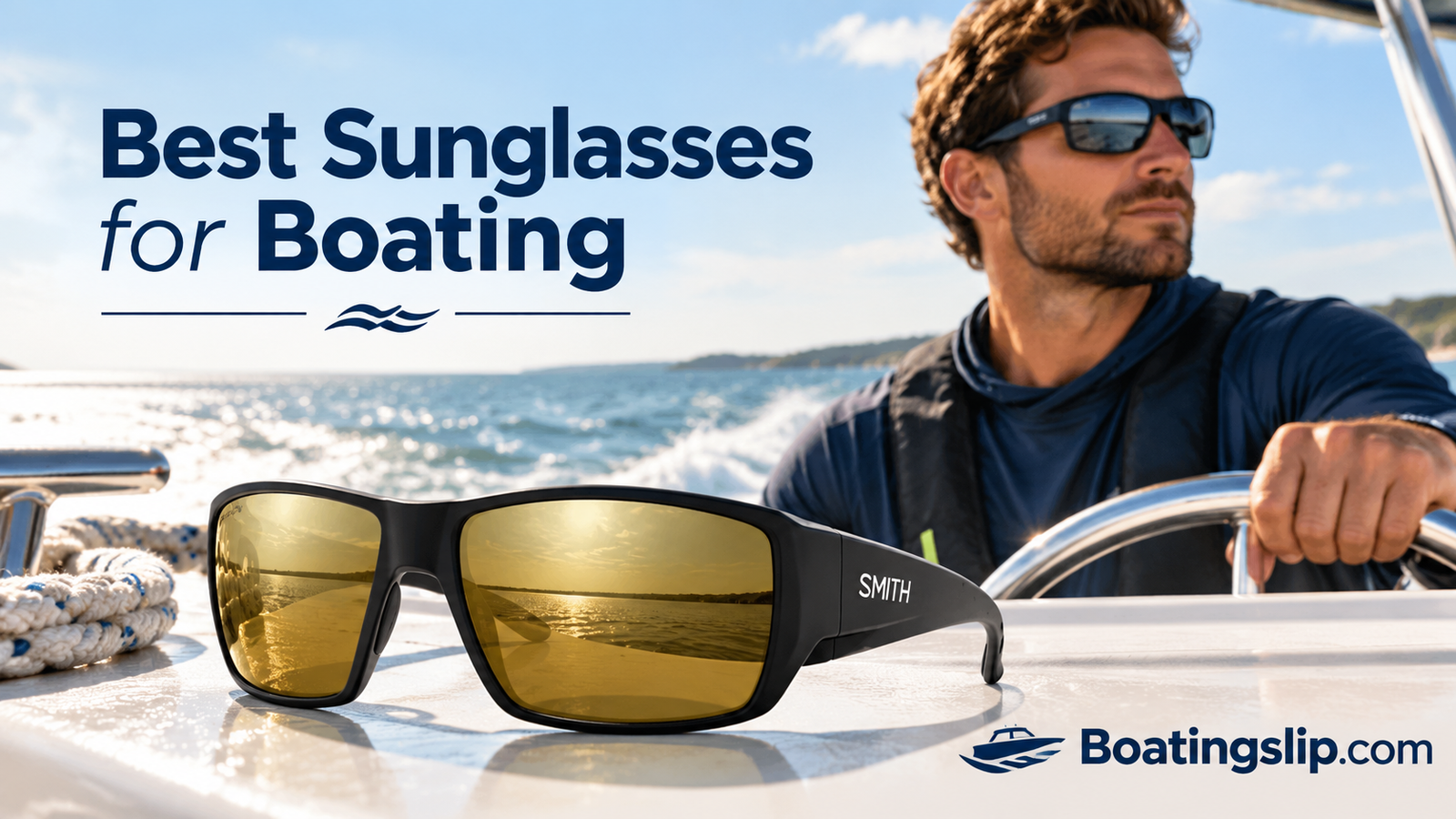
Best Sunglasses for Boating
Nineteen polarized pairs tested against glare, spray, and the kind of light that bounces off open water — sorted by what you actually do on a boat, what you want to spend, and how badly you mind losing a pair overboard.

The Short Version
Sunglasses Are Safety Equipment on a Boat — Not Just an Accessory
Spend a full day on the water without proper eyewear and you will learn the hard way what every captain already knows: glare is not a nuisance, it is a hazard. Light reflecting off the surface of a lake, bay, or ocean arrives from angles that ordinary sunglasses were never designed to handle. It creeps in from the sides, bounces off white fiberglass, and punches up through the windshield of a center console. The result is squinting, eye fatigue, headaches, and — most importantly — missed detail: a channel marker you should have seen, a floating line in the water, a subtle color change that tells an angler there is a drop-off ahead.
Good boating sunglasses do three jobs at once. They cut horizontal glare with polarized filtration, they protect against ultraviolet exposure that is dramatically more intense on open water, and they stay on your face when wind, spray, and a sudden wake would send a lesser pair into the deep. That combination is why dedicated marine eyewear has its own design language: wide wraparound coverage, hydrophilic grip points at the nose and temples, corrosion-resistant hardware, and lens tints tuned for blue and green water.
We assembled nineteen polarized pairs that cover the full spectrum — from premium offshore glass to floating frames that cost less than a tank of gas — and sorted them by how people actually boat. Some readers are chasing mahi offshore. Some are poling the flats. Some are towing kids on a tube and just want to stop squinting. Whatever your version of a day on the water looks like, there is a frame here for it.
Before you cast off
While you are sorting out gear, make sure the safety side of the checklist is covered too. Our guide to what type of life jacket is required for boating is a good starting point, and we keep a running list of the best life jackets for adults boating if yours has been in the console locker for a decade.
Ready to stop squinting? Start with the top-rated polarized frames and compare today’s pricing before your next trip.
Check Price on AmazonAt a Glance
Quick Comparison: Our Top Picks
Every pair in this guide, side by side. Use this table to shortlist by use case, then scroll down for the full hands-on take on each one. Links open in a new tab so you do not lose your place.
Swipe to see more →
| # | Image | Product | Key Specs | Verdict | Price |
|---|---|---|---|---|---|
| 01 |  |
Top PickCosta Del Mar Blackfin PolarizedBest Overall | Polarized · Full wrap · Glass or poly lens options · Non-slip nose pads | The do-it-all offshore wrap that stays put when the spray starts flying. | Check Price on Amazon |
| 02 |  |
Maui Jim Kaiwi Channel PolarizedBest Premium Clarity | Polarized · High-contrast lens tech · Lightweight frame · Full UV block | Color and contrast so good the water almost looks unfair. | Check Price on Amazon |
| 03 | |
Smith Guide’s Choice PolarizedBest for Fishing | Polarized · ChromaPop lens tech · High-wrap coverage · Non-slip pads | Purpose-built for reading water and spotting fish before they spot you. | Check Price on Amazon |
| 04 |  |
Bajío Annette PolarizedBest Smaller Fit | Polarized · Balanced profile · Water-ready frame · Strong glare control | A refined, lower-profile frame for smaller faces and long flats days. | Check Price on Amazon |
| 05 |  |
Dragon H2O Mari Floating PolarizedBest Floating | Polarized · Floating construction · Color-optimized lens · Grip points | Genuinely floats — panic optional when it goes overboard. | Check Price on Amazon |
| 06 |  |
Suncloud Zephyr PolarizedBest Brand-Name Value | Polarized · Lightweight · UV protection · Everyday-friendly shape | Real optical heritage without the premium price tag. | Check Price on Amazon |
| 07 |  |
Columbia Utilizer Polarized WrapBest Budget Wrap | Polarized · Wraparound · Sport styling · Peripheral glare coverage | Blocks side glare properly and costs less than a decent rod holder. | Check Price on Amazon |
| 08 |  |
Wiley X WX Apex PolarizedBest Protective | Polarized · Impact-rated design · Wrap coverage · Working-boat ready | Serious eye protection for rough days, working decks, and real wind. | Check Price on Amazon |
| 09 |  |
Leupold Payload PolarizedBest All-Day Comfort | Polarized · Optics-house pedigree · Balanced weight · Full coverage | The pair you forget you are wearing by hour six. | Check Price on Amazon |
| 10 |  |
O’Neill Harlyn 2.0 PolarizedBest Surf Style | Polarized · Water-friendly build · Casual styling · Lightweight | Surf-born looks with a price that forgives hard use. | Check Price on Amazon |
| 11 |  |
goodr OG PolarizedBest Ultra-Budget | Polarized · No-slip coating · Lightweight · Minimal bounce | No-slip, no-bounce, and no heartbreak if they go for a swim. | Check Price on Amazon |
| 12 |  |
Ray-Ban Wayfarer PolarizedBest Classic Style | Polarized · Iconic shape · Premium finish · Dockside-to-dinner wear | The shape everyone knows, with real glare control for the marina. | Check Price on Amazon |
| 13 |  |
Pilotfish Ally PolarizedBest Floating Security | Polarized · Floating frame · Secure fit · Paddle-friendly | Built for the moment your glasses leave your face unexpectedly. | Check Price on Amazon |
| 14 |  |
DUCO 8177 Sports PolarizedBest Value Sports Wrap | Polarized · Aggressive wrap · Sport fit · Entry-level price | Full wraparound coverage at a price that invites buying two. | Check Price on Amazon |
| 15 |  |
Fishoholic Polarized Fishing SunglassesBest Budget Fishing | Polarized · Fishing-first design · Coverage where it counts · Spare-pair value | Keep one in the console and one in the truck without guilt. | Check Price on Amazon |
| 16 |  |
ZENOTTIC Polarized SunglassesBest Lightweight Budget | Polarized · Light frame · Clean styling · Weekend-cruise ready | Comfortable enough that you forget the price. | Check Price on Amazon |
| 17 |  |
KALIYADI Polarized SunglassesBest Everyday Starter | Polarized · Simple design · Full UV care · Versatile fit | A clean first pair for boaters who want one pair for everything. | Check Price on Amazon |
| 18 |  |
RIVBOS Polarized Sports SunglassesBest for Active Days | Polarized · Sport fit · Secure grip · Multi-sport use | Stays anchored through paddling, tubing, and dock sprints. | Check Price on Amazon |
| 19 |  |
maivnz Floating Polarized SunglassesBest Budget Floating | Polarized · Floats on water · Lightweight · Backup-pair friendly | The spare pair that saves the day when the good ones go over the rail. | Check Price on Amazon |
Want to compare live pricing? Browse the full range of polarized boating sunglasses and filter by frame style, lens type, and fit.
Shop Boating SunglassesSection 01
Why Boating Sunglasses Matter More Than You Think
Ask a delivery captain what they would never leave the dock without and the answer is rarely a gadget. It is a knife, a radio, and a good pair of sunglasses. That answer surprises people until they have squinted their way through a six-hour crossing and spent the evening with a headache behind their eyes.
The physics are simple but unforgiving. Water reflects a meaningful share of the light that hits it, and that reflected light is horizontally polarized — which is exactly the orientation that bounces off flat surfaces and drives straight into your eyes. On a bright afternoon, the surface of a bay can deliver more light to your eyes than the sky above it. Add the white gelcoat of a boat, a fiberglass deck, and the chrome of a windshield frame, and you are getting hit from every direction at once.
Glare hides information
Boating is a game of small signals. A ripple on flat water that means a shallow bar. A change in water color that marks a channel edge. A dark shape under the surface that is a floating log or a crab pot buoy line. Glare does not just make these signals uncomfortable to look at — it erases them. Polarized lenses strip out the horizontal component of reflected light and hand you back the detail underneath. Anglers talk about “putting on their sight-fishing glasses” the way a golfer talks about reading a green: it is a functional act, not a fashion one.
UV exposure multiplies on the water
Ultraviolet radiation does not just come from above. It reflects up off the water and arrives at your eyes from angles that ordinary eyewear ignores. The result is a cumulative exposure problem that adds up season after season. Quality boating sunglasses block essentially all UVA and UVB regardless of lens darkness, and wider frames simply leave less unprotected skin and eye surface exposed. If you also boat in open cockpits or on sailboats where you look up constantly, that protection matters even more.
Fit is a safety issue, not a comfort one
A pair of sunglasses that slides down your nose every time you look down at a fishfinder is worse than no sunglasses at all, because it trains you to ignore your eyewear. On a boat, the right pair stays anchored through wind, spray, and sudden acceleration. That is why dedicated marine frames use grippy nose pads and temple tips that actually get tackier when wet, and why so many boaters run a retainer strap as standard equipment.
There is also a less obvious benefit: contrast. Lens tints designed for marine use emphasize greens and blues in a way that makes surface texture pop. Once you have seen a school of bait pushing a ripple line through a quality marine tint, going back to an untinted or generic grey lens feels like turning down the resolution on the world.
See the difference yourself. Start with a polarized pair designed for reflected glare and full UV coverage.
Check Price on AmazonSection 02
Polarized Lens Technology: What It Actually Does on the Water
Polarization is the single most important feature in any pair of boating sunglasses, and it is also the most misunderstood. Dark lenses reduce brightness. Polarized lenses reduce glare. Those are different jobs, and only one of them solves the specific problem water creates.
How the filter works
Light reflecting off a horizontal surface like a lake becomes horizontally polarized — its waves line up in one orientation. A polarizing filter in the lens is oriented vertically, so it absorbs that horizontal light before it reaches your eye. The practical effect is instant and dramatic: the blinding sheet of white on the water disappears, and you can see through the surface instead of at it. Anglers call this “cutting glare,” and it is the reason a fisherman can spot a fish cruising in three feet of water that is completely invisible to someone in non-polarized shades.
Lens colors for marine use
Once the glare is handled, tint becomes a matter of what water you run. There is no single right answer, but there are well-worn conventions:
- Copper, amber, and bronze tints are the sight-fishing favorites. They boost contrast and make it easier to read bottom structure, sand color changes, and fish shadows in shallow water.
- Grey and grey-green tints deliver the most neutral color rendition. They are the all-purpose choice for offshore runs, long days at the helm, and anyone who wants the world to look like it actually looks.
- Blue and mirrored finishes are highly effective in open, bright conditions where light comes from every direction. Mirror coatings also reduce the light load before it reaches the polarizing filter, which helps in intense midday sun.
Many premium brands layer additional technology on top: contrast-enhancing lens systems, color optimization that separates blues and greens, and anti-reflective coatings on the back surface to stop light bouncing in from behind. These systems are not marketing fluff — when you are trying to distinguish a submerged rock from a dark patch of weed, the extra separation is genuinely useful.
Glass versus polycarbonate and other lens materials
Glass lenses offer the crispest optics and the best scratch resistance, which is why offshore and flats anglers love them. The trade-off is weight and impact risk. Polycarbonate and similar advanced plastics are lighter, more impact-resistant, and safer on a bouncing boat, and modern versions are optically excellent. If you are on a working deck, running a center console at speed, or fishing where hooks fly, impact resistance deserves serious weight in your decision.
The honest test for polarization
Look at a reflective surface — a car windshield, a wet dock, or the water itself — and rotate the glasses while you look through one lens. A genuinely polarized lens will make the glare appear and disappear as you turn it. This takes about five seconds and separates real polarization from tinted plastic that merely claims it.
One trade-off to know
Polarized lenses can make some digital screens harder to read at certain angles, including some older multifunction displays and instrument clusters. Most modern marine displays are designed with this in mind, but if you rely heavily on screens, try a pair on at the helm before committing. Many boaters keep the polarized pair for outside and switch to a lighter tint for night runs.
For a deeper look at reading the water itself once your eyewear is dialed in, see our guide to how to read a nautical chart — the details you spot through good lenses and the details on the chart should agree with each other.
Upgrade your view. Polarized fishing and boating frames cut reflected glare that ordinary shades simply cannot touch.
Check Price on AmazonSection 03
How to Choose the Right Boating Sunglasses
Every pair in this guide is polarized, so the differences come down to fit, coverage, materials, and how you actually spend your time on the water. Use this as a decision framework rather than a checklist — a couple of these points will matter far more to you than the rest.
Fit and coverage come first
On a boat you want a frame that closes the gap around your eyes. Wraparound and high-coverage designs stop reflected light from arriving at oblique angles and cut the wind that makes eyes water at speed. The flip side is that very tight wraps can press on the temples or cheekbones of wider faces, so try before you assume. As a rule: the frame should sit level, grip without pinching, and stay in place when you look down and shake your head gently.
Frame materials and hardware
Saltwater is brutal on gear. Metal hinges corrode, cheap coatings chalk and peel, and some plastics get brittle under constant UV. Look for corrosion-resistant hardware, quality coatings, and frames rated or designed for water use. If you boat in salt, rinse your sunglasses in fresh water at the end of the day — this single habit extends the life of any pair more than any product feature.
Weight and all-day comfort
Lighter frames are easier to forget, but weight distribution matters more than the raw number. A slightly heavier pair that balances well can feel lighter than a featherweight pair that pinches. Pressure points at the nose bridge and behind the ears are the usual culprits. If you fish dawn to dusk or run long crossings, comfort stops being a luxury.
Retainers, straps, and floating builds
A retainer strap is the cheapest insurance in boating. Even with a great fit, one wake, one stumble, or one moment of leaning over the gunwale can send a pair to the bottom. Floating frames take the fear out of the equation entirely, and several excellent options appear later in this guide. Either way, budget a few dollars for a strap — your future self will thank you.
Mistakes worth avoiding
- Buying on style alone. A great-looking pair with no wrap coverage will have you squinting by mid-morning.
- Assuming darker means better. Darkness reduces brightness; polarization removes glare. You want the second one.
- Skipping the fit check. Slipping frames are unusable frames on a moving boat.
- Spending everything on one pair. A common strategy among serious boaters: one premium pair for daily use and one cheap floating pair as a backup in the console.
- Ignoring clothing and sun layers. Eyewear is one part of a sun strategy. Loose, breathable, sun-protective layers matter too — see our picks for the best boating clothes for the rest of the picture.
Quick decision rule
Offshore and fishing: prioritize wrap coverage, contrast-enhancing tint, and premium optics. Casual cruising and watersports: prioritize fit, grip, and durability — or just buy floating and relax. Style-first boaters: find the iconic shape you love and make sure it is genuinely polarized.
Found your criteria? Compare today’s prices across wrap, floating, and classic frame styles in one place.
Check Price on AmazonSection 04
Premium Picks: Frames Worth the Investment
There is a real ceiling in eyewear optics, and these two pairs live near it. If you spend serious hours on the water — running charters, fishing tournaments, crossing open bays in variable light — the jump in clarity, color separation, and comfort is not subtle. These are the pairs people buy once and then replace with the same model a decade later.
Premium tier at a glance
Swipe to see more →
| Image | Product | Best For | Standout | Price |
|---|---|---|---|---|
|
Costa Del Mar Blackfin Polarized | Offshore all-rounders | Maximum coverage and legendary water optics | Check Price on Amazon |
|
Maui Jim Kaiwi Channel Polarized | Clarity chasers | Best-in-class color and contrast | Check Price on Amazon |
Costa Del Mar Blackfin Polarized
Best Overall
The Blackfin is the archetypal offshore sunglass: a wide, confident wrap with generous coverage above and beside the eyes, a frame that grips harder as it gets wet, and lens options in both glass and advanced plastics depending on how you weight clarity versus impact resistance. Costa built its reputation on water, and it shows in how these handle harsh midday light on open bays.
Key Features
- Full wraparound geometry designed to shut out peripheral and reflected glare
- Available lens material choices spanning premium glass and lightweight impact-resistant options
- Non-slip nose and temple contact points that hold through spray and sweat
- Marine-proven lens tints tuned for blue and green water conditions
- Durable frame construction intended for daily hard use, not occasional wear
Pros
- Exceptional glare control from every angle
- Stays anchored during active fishing and fast runs
- Lens options let you match the frame to your water
- Built for saltwater exposure and long seasons
Cons
- Premium pricing puts it out of impulse range
- Full wrap can feel snug on wider face shapes
Who It’s Best For
Boaters who live on the water and want one uncompromising pair that handles offshore glare, full-day comfort, and hard use without complaint. If you only buy once, this is the category to buy in.
Maui Jim Kaiwi Channel Polarized
Best Premium Clarity
Maui Jim’s reputation rests on what happens when you put the lenses on: colors gain depth, water texture becomes readable, and the world stops feeling bleached. The Kaiwi Channel carries that lens performance in a frame that feels light and composed through a full day, with polarization and UV protection doing the heavy lifting in punishing tropical light.
Key Features
- High-contrast polarized lens technology designed for bright reflective environments
- Lightweight frame that stays comfortable across long days at the helm
- Complete UV protection alongside glare filtration
- Lens treatments that enhance color without distorting it
- Refined styling that moves easily from boat to dinner ashore
Pros
- Best-in-class color and surface detail
- Very comfortable for all-day wear
- Excellent in intense, direct tropical light
- Clean look that works off the water too
Cons
- Sits at the top of the price range
- Less coverage than a dedicated fishing wrap
Who It’s Best For
Boaters who value optical quality above all else — cruisers, sailors, and anyone who spends hours scanning bright water and wants maximum visual comfort without the aggressive look of a fishing frame.
Invest in your eyes. Premium polarized optics pay for themselves in comfort, clarity, and fewer end-of-day headaches.
Check Price on AmazonSection 05
Built for the Anglers: Fishing-Focused Frames
Fishing sunglasses are a design brief of their own. The goal is not just comfort in bright light — it is reading structure, spotting fish, and tracking a fly or lure through the surface film without losing visual contact. Frames in this category lean into coverage, contrast, and grip, because an angler is constantly moving: leaning over the gunwale, poling a skiff, casting into wind, and scanning for birds and bait all day.
Fishing-focused frames at a glance
Swipe to see more →
| Image | Product | Best For | Standout | Price |
|---|---|---|---|---|
|
Smith Guide’s Choice Polarized | Sight fishing | High coverage plus contrast-tuned lenses | Check Price on Amazon |
|
Bajío Annette Polarized | Smaller fits | Premium glare control in a balanced profile | Check Price on Amazon |
|
Leupold Payload Polarized | Long days | Optics-house clarity with all-day comfort | Check Price on Amazon |
Smith Guide’s Choice Polarized
Best for Fishing
The name says it: this is the frame guides reach for. The Guide’s Choice pairs a high-wrap, high-coverage frame with Smith’s contrast-enhancing lens technology, which separates the blues and greens that define water so bottom structure, weed edges, and fish shapes register faster. The coverage extends where anglers need it most — above and to the sides — because glare on a skiff arrives from every direction at once.
Key Features
- High-wrap frame geometry for maximum glare and light blockage
- Contrast-enhancing polarized lens technology tuned for water reading
- Non-slip nose and temple pads that hold through sweat and spray
- Large lens area that supports wide peripheral awareness
- Proven choice among guides and serious inshore anglers
Pros
- Outstanding for sight fishing and structure reading
- Excellent coverage against side glare
- Secure, comfortable fit during active casting
- Lens tech gives a genuine edge in variable light
Cons
- High wrap may feel tight on broader faces
- Sport styling is not for dress occasions
Who It’s Best For
Anglers who fish shallow water, sight cast, or spend the day scanning structure. If reading the water is the job, this is the tool.
Bajío Annette Polarized
Best Smaller Fit
Bajío built its name in the saltwater flats world, and the Annette carries that DNA in a frame with a more balanced, lower-profile shape. It is the answer for boaters who find fishing wraps too large or too aggressive — without giving up the polarization performance and water-focused lens tuning that flats fishing demands.
Key Features
- Refined, balanced frame profile that suits smaller and medium faces
- Strong polarized glare control for flats, bays, and open water
- Water-ready construction with comfortable grip points
- Lens options oriented toward clarity and true color in bright conditions
- All-day comfort for long poling and cruising sessions
Pros
- Excellent fit for smaller face shapes
- Serious fishing-grade optics without bulk
- Understated look that works everywhere
- Comfortable through dawn-to-dusk days
Cons
- Less coverage than a full offshore wrap
- May sit small on larger faces
Who It’s Best For
Flats anglers, inshore boaters, and anyone with a smaller face who wants premium water optics in a frame that actually fits — instead of a downsized afterthought.
Leupold Payload Polarized
Best All-Day Comfort
Leupold made its name in precision optics, and that heritage translates into a pair of sunglasses that prioritizes visual clarity and physical balance. The Payload is the pair you put on at first light and still have on at sunset without thinking about it — a frame with even weight distribution, generous coverage, and the kind of lens clarity that comes from a company obsessed with light transmission.
Key Features
- Polarized lenses from a brand rooted in precision optics
- Balanced frame weight designed for extended wear
- Comfortable contact points that avoid common pressure spots
- Coverage geometry suited to bright, open-water conditions
- Understated styling that fits both boat and shore
Pros
- Superb long-session comfort
- Sharp, true-to-life optics
- Versatile styling for mixed use
- Built by a serious optics manufacturer
Cons
- Not as specialized as a pure fishing frame
- Less name recognition in the sunglass world
Who It’s Best For
Boaters who wear sunglasses from dock to dusk and need a set-and-forget pair — family cruising, long crossings, and full days where comfort decides everything.
Fishing this weekend? A contrast-tuned polarized pair is the cheapest advantage you will ever add to your tackle.
Check Price on AmazonSection 06
Float or Sink? Floating Sunglasses for Real-World Boating
Here is a fact that every boater learns eventually: sunglasses end up in the water. Not often, but reliably. It happens leaning over the rail, jumping off the swim platform, taking a wake at the wrong moment, or handing a pair to a friend who is less careful than you are. Standard frames sink fast and are gone forever. Floating frames turn a disaster into a story.
Floating technology usually comes down to frame density and construction — the materials are engineered to sit above the surface rather than descend. Pair one with a retainer and you have the most carefree setup possible for watersports, paddle days, and family boating. And for everything else that needs to stay dry on board, our guide to the best dry bags for boating covers the rest of your kit.
Floating frames at a glance
Swipe to see more →
| Image | Product | Best For | Standout | Price |
|---|---|---|---|---|
|
Dragon H2O Mari Floating Polarized | Watersports | Premium floating build with color-tuned lenses | Check Price on Amazon |
|
Pilotfish Ally Polarized | Paddlers | Floating security for active days | Check Price on Amazon |
|
maivnz Floating Polarized Sunglasses | Backup pairs | Budget floating insurance | Check Price on Amazon |
Dragon H2O Mari Floating Polarized
Best Floating
The Mari comes from Dragon’s water-specific H2O line, and it pairs genuine floating construction with the brand’s color-optimized lens technology. That combination is rare: most floating glasses treat optics as an afterthought, while these were designed so you never have to choose between seeing well and keeping your shades.
Key Features
- Floating frame construction that stays on the surface if dropped
- Polarized lenses with color optimization for water environments
- Grip-oriented contact points for wet, active conditions
- Water-first design lineage built around real marine use
- Secure fit suitable for watersports and boat days alike
Pros
- Actually floats — no bottom-of-the-lake panic
- Serious lens quality for a floating frame
- Great grip in wet conditions
- Looks good on and off the water
Cons
- Higher cost than basic floating options
- Still worth pairing with a retainer in rough water
Who It’s Best For
Watersports enthusiasts, swimmers, paddleboarders, and boaters who want premium optics without the fear of losing a premium pair.
Pilotfish Ally Polarized
Best Floating Security
Pilotfish designs around one scenario: gear that leaves your face unexpectedly. The Ally is a floating polarized pair built with that reality in mind — secure fit, water-ready materials, and a philosophy that assumes you will end up in the water at some point. For kayakers, paddleboarders, and families with kids aboard, that assumption is simply correct.
Key Features
- Floating construction for accidental drops and overboard moments
- Polarized lenses that cut surface glare on bright water
- Secure, active fit designed for movement
- Lightweight build that suits all-day paddle and boat use
- Purpose-driven design for water safety and convenience
Pros
- Peace of mind for active water use
- Comfortable and lightweight
- Good coverage for a casual frame
- Designed with real overboard moments in mind
Cons
- Not as specialized for fishing sight lines
- Fit may vary for very wide faces
Who It’s Best For
Paddlers, swimmers, and boaters who move around a lot on the water and want eyewear that forgives the occasional leap, stumble, or splash.
maivnz Floating Polarized Sunglasses
Best Budget Floating
This is the console-drawer pair. The maivnz floats, it is polarized, and it costs little enough that losing it would be an inconvenience rather than a tragedy. That makes it ideal as a backup, a loaner, or a first pair for a teenager who just discovered wakeboarding.
Key Features
- Floating frame design that stays visible on the surface
- Polarized lenses for everyday glare reduction
- Lightweight construction for casual, all-day wear
- Approachable pricing that supports buying spares
- Simple, versatile styling for mixed use
Pros
- Floats at a budget price
- Perfect as a backup or loaner pair
- Light and comfortable
- Low-stakes ownership
Cons
- Optics do not match premium brands
- Build quality reflects the price
Who It’s Best For
Anyone who needs a spare floating pair on board — families, watersports groups, and smart boaters who keep insurance in the glove box.
Make overboard a non-event. Floating polarized frames keep your sunglasses — and your composure — above the surface.
Check Price on AmazonSection 07
Everyday Value from Trusted Names
Not everyone wants to spend premium money on eyewear that will face salt, sun, and the occasional drop on a fiberglass deck. This tier is the sweet spot for many boaters: recognizable brands with real optical standards, sensible pricing, and designs that work from the marina to the sandbar. These are the pairs you can replace without wincing and still trust on a bright crossing.
Value picks at a glance
Swipe to see more →
| Image | Product | Best For | Standout | Price |
|---|---|---|---|---|
|
Suncloud Zephyr Polarized | Brand-name value | Optics heritage at a friendly price | Check Price on Amazon |
|
Columbia Utilizer Polarized Wrap | Budget wrap | Peripheral glare coverage for less | Check Price on Amazon |
|
O’Neill Harlyn 2.0 Polarized | Surf style | Water-born looks, easy price | Check Price on Amazon |
Suncloud Zephyr Polarized
Best Brand-Name Value
Suncloud comes from the same optics family as Smith, and that lineage shows in the Zephyr’s lens performance. You get genuine polarization and clean optical quality in a frame priced for real life. It is the smart middle path: better than disposable eyewear, comfortably below premium pricing.
Key Features
- Genuine polarized lens filtration for reflected glare
- Lightweight frame that suits extended wear
- Reliable UV protection for bright days on the water
- Versatile, everyday-friendly frame shape
- Backed by an established optics reputation
Pros
- Strong optical quality for the price
- Comfortable and light
- Works for boating, driving, and daily wear
- Easy to replace without regret
Cons
- Less coverage than fishing-specific wraps
- Fewer premium lens treatments at this tier
Who It’s Best For
Weekend boaters and value hunters who want trusted optics without the premium price — and who would rather own two good pairs than one expensive one.
Columbia Utilizer Polarized Wrap
Best Budget Wrap
The Utilizer is a straightforward, sporty wraparound at a price that feels like a rounding error compared to premium marine eyewear. The wrap matters: by closing the gaps at the sides, it blocks the oblique reflected light that flat lenses simply cannot handle. For fishing, watersports, and bright days at speed, that coverage is the whole game.
Key Features
- True wraparound shape for peripheral glare coverage
- Polarized lenses suited to reflective water environments
- Sport-oriented frame with a secure, active fit
- Lightweight construction for long days outdoors
- Approachable pricing from a recognized outdoor brand
Pros
- Real wrap coverage at a budget price
- Light and comfortable for active use
- Good all-round glare performance
- Easy to find as a replacement pair
Cons
- Lens clarity is good, not elite
- Sport styling only
Who It’s Best For
Boaters who want wraparound coverage without premium pricing — anglers, watersports fans, and anyone tired of light sneaking in around the edges.
O’Neill Harlyn 2.0 Polarized
Best Surf Style
O’Neill comes from the surf world, and the Harlyn 2.0 wears that heritage comfortably. It is a water-friendly, casual pair with genuine polarization and a price that makes it easy to live with — meaning it goes to the beach, the boat, and the truck bed without a second thought. For boating families and lifestyle users, that carefree factor is the appeal.
Key Features
- Polarized lenses for real glare reduction on the water
- Water-friendly frame build rooted in surf culture
- Lightweight, casual fit for everyday wear
- Versatile styling that works at the dock and on shore
- Pricing that supports hard, honest use
Pros
- Relaxed, good-looking design
- Comfortable for long casual days
- Real polarization at an easy price
- Great for beach-and-boat lifestyles
Cons
- Less coverage than a fishing wrap
- Not designed for competitive angling
Who It’s Best For
Casual boaters, beach lovers, and families who want one easy pair that handles sun, spray, and sand without needing to be babied.
Smart money, solid optics. Compare everyday value frames from trusted outdoor and surf brands.
Check Price on AmazonSection 08
Maximum Protection on Deck: Impact-Rated Eyewear
Some boats are gentle floating patios. Others are working platforms — commercial decks, tournament center consoles at speed, boats where anchors swing and lines snap back. For those environments, impact protection is not a bonus feature. It is the reason to choose a specific pair. Eyewear built to protective standards combines polarized glare control with lenses and frames engineered to withstand hits that would shatter ordinary sunglasses.
Think about what is in the air on an active boat: a lead-head jig swinging on a windy cast, a snapping bungee, a wave that throws you against a hardtop support. Shatter-resistant lenses and rugged frame construction turn those near-misses into non-events. And while you are thinking about protection on deck, it is worth knowing what the rules require in your area — our overview of what type of life jacket is required for boating covers the essentials.
Wiley X WX Apex Polarized
Best Protective
Wiley X comes from the protective eyewear world, and the WX Apex brings that DNA to the water. This is a polarized pair with the kind of rugged, impact-oriented build that working boaters, military and law enforcement users, and serious offshore anglers gravitate toward. It wraps properly, it holds on, and it is engineered to take punishment.
Key Features
- Impact-resistant construction rooted in protective eyewear standards
- Polarized lenses for glare control alongside physical protection
- Wraparound coverage that shields eyes from wind, spray, and debris
- Secure, functional fit designed for active and demanding use
- Rugged frame built for real-world working conditions
Pros
- Serious impact protection for working decks
- Excellent wrap and wind coverage
- Polarized performance without compromise
- Proven in demanding professional environments
Cons
- Utilitarian styling will not suit everyone
- Overbuilt for purely casual use
Who It’s Best For
Working boaters, offshore anglers, and anyone who wants genuine eye protection on a deck where things move fast and fly unpredictably.
Protect what matters. Impact-rated polarized frames handle glare and hard use at the same time.
Check Price on AmazonSection 09
Style-First Frames That Still Perform
Let’s be honest: for a lot of boating days, the sunglasses are part of the outfit. Marina hopping, sunset cruises, docking at a waterfront restaurant — these moments call for a frame that looks like a classic rather than a piece of sports equipment. The good news is that style and glare control are no longer mutually exclusive. The pairs in this section look sharp and still deliver genuine polarization for the reflective environment you are standing in.
Style picks at a glance
Swipe to see more →
| Image | Product | Best For | Standout | Price |
|---|---|---|---|---|
|
Ray-Ban Wayfarer Polarized | Classic style | Iconic shape with real polarized performance | Check Price on Amazon |
|
goodr OG Polarized | Ultra-budget fun | No-slip, no-bounce, zero stress | Check Price on Amazon |
Ray-Ban Wayfarer Polarized
Best Classic Style
The Wayfarer is arguably the most recognized sunglass shape ever made, and in its polarized version it earns a spot on the water as well as the dock. It is not a fishing wrap and does not pretend to be — but for marina days, sunset runs, and any moment where you want to look like yourself and still cut the glare bouncing off the harbor, it delivers.
Key Features
- Genuine polarized lens options for reflected glare control
- Timeless frame shape with enduring style appeal
- Quality construction and finish throughout
- Comfortable fit suited to everyday and social wear
- Transitions effortlessly from boat to shore
Pros
- Instantly recognizable, universally flattering
- Real polarization, not just dark tint
- Premium look and finish
- Works far beyond the boat
Cons
- Limited coverage compared with wrap designs
- Premium pricing for a style-focused frame
Who It’s Best For
Boaters who split time between the marina, the water, and the waterfront — and want one pair that looks right in all three places.
goodr OG Polarized
Best Ultra-Budget
goodr made its name with runners by solving the two complaints everyone has about cheap sunglasses: they slide and they bounce. The OG is lightweight, coated at the contact points to stay put, and priced so low that losing a pair is a shrug rather than a crisis. On a boat, that combination is quietly brilliant.
Key Features
- Polarized lens options for everyday glare reduction
- No-slip coating designed to grip during activity
- Lightweight frame with minimal bounce
- Compact fit that works across many face shapes
- Pricing that makes owning spares realistic
Pros
- Stays put during active movement
- Absurdly affordable
- Light and comfortable
- Fun, low-stakes ownership
Cons
- Modest coverage and protection
- Optics are basic rather than premium
Who It’s Best For
Anyone who wants an easy, comfortable pair for casual boat days — or a beater pair that lives in the dock box and never gets precious.
Look sharp on the dock. Classic polarized frames that work as well at dinner as they do at the helm.
Check Price on AmazonSection 10
Budget All-Stars That Punch Above Their Price
Here is the strategy experienced boaters swear by: keep a genuinely cheap polarized pair in every place a pair might be needed — the truck, the console, the dock box, the travel bag. The five frames below make that possible. None of them compete with premium optics on lens purity, and none of them claim to. What they offer is real polarization, acceptable fit, and a price that turns lost sunglasses into a non-event.
Pair an inexpensive pair with decent footwear and sun layers and you have a complete kit for almost nothing — see our picks for the best boating shoes if the rest of the outfit needs attention too.
Budget frames at a glance
Swipe to see more →
| Image | Product | Best For | Standout | Price |
|---|---|---|---|---|
|
DUCO 8177 Sports Polarized | Sports wrap value | Aggressive coverage, entry price | Check Price on Amazon |
|
Fishoholic Polarized Fishing Sunglasses | Budget fishing | Fishing-first design, spare-pair price | Check Price on Amazon |
|
RIVBOS Polarized Sports Sunglasses | Active days | Sport fit that holds through movement | Check Price on Amazon |
DUCO 8177 Sports Polarized
Best Value Sports Wrap
The DUCO 8177 is a full wraparound sport frame at an entry-level price, and that combination makes it one of the smartest budget buys for boating. Wrap coverage is the single most effective design choice for cutting oblique glare, and here you get it without opening your wallet very far.
Key Features
- Aggressive wraparound geometry for maximum light blockage
- Polarized lenses for reflected glare on water and road
- Sport-oriented fit with secure contact points
- Lightweight construction for extended activity
- Entry-level pricing with real coverage benefits
Pros
- Excellent coverage per dollar
- Stays put during physical activity
- Good for multiple sports and seasons
- Easy to keep as a backup pair
Cons
- Finish and detail quality reflect the price
- Very snug on wide faces
Who It’s Best For
Active boaters who want wraparound coverage and polarization on a strict budget — and anyone assembling a kit of spare pairs.
Fishoholic Polarized Fishing Sunglasses
Best Budget Fishing
Fishoholic builds for anglers first and asks questions about fashion never. These are fishing sunglasses in the plainest sense: polarized, adequately covered, priced to live permanently in a tackle bag or console. The idea is simple — every fishing trip should have a polarized pair ready, and cost should not be the reason it does not.
Key Features
- Fishing-oriented polarized lens design
- Coverage geometry suited to angling and boat use
- Lightweight frame for all-day comfort
- Low pricing that supports keeping multiple pairs
- Practical, no-frills construction
Pros
- Designed with fishing in mind
- Excellent spare-pair economics
- Comfortable enough for long sessions
- Simple and effective
Cons
- Basic build quality and finish
- Not ideal as an only premium pair
Who It’s Best For
Anglers who want a dedicated fishing pair in every bag, boat, and vehicle — and refuse to lose expensive gear to a bad cast.
ZENOTTIC Polarized Sunglasses
Best Lightweight Budget
The ZENOTTIC is a clean, light, polarized pair that covers the basics without drama. It is the kind of sunglass you forget you are wearing until someone asks where you got it — comfortable, unassuming, and entirely competent for weekend cruising, dock days, and everyday sun.
Key Features
- Polarized lenses for everyday glare reduction
- Lightweight frame for unforced comfort
- Clean styling that suits most face shapes
- Full UV protection for bright outdoor conditions
- Budget-friendly pricing with solid all-round performance
Pros
- Genuinely light and easy to wear
- Versatile, unfussy design
- Strong value for the feature set
- Good entry into polarized eyewear
Cons
- Less coverage than wraparound frames
- Modest performance in extreme glare
Who It’s Best For
Weekend boaters and commuters who want one comfortable polarized pair for everything from the marina to the morning drive.
KALIYADI Polarized Sunglasses
Best Everyday Starter
If you are buying your first genuinely polarized pair and do not want to overthink it, the KALIYADI is a sensible place to start. It is simple, comfortable, and covers the fundamentals — polarization, UV protection, and a fit that works for a wide range of people — at a price that makes the experiment risk-free.
Key Features
- Polarized lenses handling everyday reflected glare
- Straightforward, versatile frame design
- Full UV protection for outdoor days
- Comfort-oriented fit for extended wear
- Accessible pricing for first-time buyers
Pros
- Great starter pair for new boaters
- Comfortable and easy to live with
- Covers all the basics properly
- Very affordable
Cons
- Basic styling and finish
- Not specialized for fishing or watersports
Who It’s Best For
New boaters, gift buyers, and anyone who wants reliable polarized protection without spending time researching lens chemistry.
RIVBOS Polarized Sports Sunglasses
Best for Active Days
The RIVBOS is built for movement — paddling, tubing, beach runs, dock sprints after a drifting fender. It is a sport-fit polarized pair with secure grip and a lightweight frame, priced low enough that taking it into hard, wet, sandy situations is simply the point.
Key Features
- Polarized lenses for glare control across water and land
- Sport-oriented fit with secure, grippy contact points
- Lightweight frame suited to high activity
- Multi-sport versatility beyond boating
- Budget pricing for hard-use situations
Pros
- Stays anchored through real activity
- Light and comfortable
- Works for many sports and seasons
- Easy to replace if lost
Cons
- Sport aesthetic only
- Lens quality is functional rather than fine
Who It’s Best For
Active families and multi-sport users who need polarized eyewear that survives wet, fast, sandy days without complaint.
Build your spare-pair stash. Budget polarized frames make lost sunglasses someone else’s problem.
Check Price on AmazonSection 11
Care, Cleaning & Storage for Marine Eyewear
Saltwater is an aggressive cleaning solution, a lens-coating destroyer, and a hinge’s worst enemy. The difference between sunglasses that last three seasons and sunglasses that last three weeks usually comes down to a handful of habits, none of which cost anything.
Rinse after every saltwater day
Fresh water, immediately, every time. Salt crystals are abrasive and hygroscopic — they scratch coatings as they form and keep attracting moisture long after the boat is on the trailer. A thirty-second rinse at the dock is worth more than any cleaning product you can buy.
Clean lenses the right way
Rinse loose grit away first. Then use a lens cleaning solution and a clean microfiber cloth, or just warm water and a dedicated microfiber. Never use paper towels, shirt hems, or chamois that has been dropped on a deck — all of them carry grit that will polish fine scratches into expensive lenses. And skip household cleaners; many contain chemicals that break down lens coatings over time.
Store them like you mean it
A hard case in the console beats a dashboard in direct sun every day of the week. Heat warps frames, softens coatings, and is the number-one cause of delamination on mirrored lenses. If you keep a pair permanently on the boat, store it in a shaded, ventilated spot — never on the dash under the windshield.
Protect the hardware
Hinges and screws are where salt does its quiet damage. A periodic rinse around the hardware and a careful drying with a soft cloth prevents the gritty, stiff hinge action that ruins otherwise good frames. If you boat in salt regularly, a small dedicated sunglass pouch with a cleaning cloth lives in your bag permanently.
The two-pair system
The most common setup among serious boaters: one premium pair for daily use that gets rinsed and cased religiously, plus one cheap floating pair that lives in the console for guests, emergencies, and the days everything goes sideways. It costs less than replacing one premium pair.
Keep your lenses crystal clear. A proper cleaning kit costs less than lunch and doubles the life of your eyewear.
Check Price on AmazonSection 12
Safety & Boating Essentials That Pair with Great Eyewear
Great sunglasses solve one problem beautifully. A safe day on the water solves several at once. Before the season starts, it is worth taking ten minutes to make sure the rest of the boat’s readiness checklist is in order — the boring stuff that matters most when conditions turn.
Life jackets, properly chosen and actually worn
The single most important safety decision on any boat is flotation. Requirements vary by location and vessel type, so start with the rules where you boat — our guide to what type of life jacket is required for boating breaks it down. Then find gear people will actually wear; our roundup of the best life jackets for adults boating focuses on comfort-first designs, and we have a dedicated guide to the best dog life jackets for boating for the four-legged crew.
Footwear and clothing for long days
Deck shoes with real grip and quick-drying, sun-protective layers turn a grueling afternoon into a comfortable one. We keep separate guides to the best boating shoes and the best boating clothes if your kit needs a refresh.
Prepare for weather before it arrives
Checking the forecast is not the same as preparing for the forecast. Know your bail-out options, brief the crew on what happens if the sky turns, and read our guide on being caught in severe weather while boating before you ever need it.
Think about where the day takes you
Some of the best boating days happen far from home waters. Long-distance cruising has its own preparation demands and its own rewards — if you have ever been curious, our explainer on what is the Great Loop in boating is a fascinating place to start dreaming. And wherever you cruise, practical tools help: we track the best boating apps for navigation, weather, and marina planning, and our guide to how to read a nautical chart is a skill that pays off every single trip.
Complete the checklist. Browse safety gear and essentials that belong next to your sunglasses in the console.
Check Price on AmazonQuestions, Answered
Frequently Asked Questions
These are the questions boaters ask most often when choosing eyewear for time on the water. If you are short on time, read the first answer and the fit question — they cover most of the decision.
Do I really need polarized sunglasses for boating, or are regular dark lenses fine?
For boating, polarization is the feature that matters most. Dark lenses make everything dimmer, but they still let reflected glare through — and on water, that reflected glare is the primary problem. A polarized filter removes that horizontal reflected light, letting you see surface detail, structure, and obstacles that would otherwise be washed out. If you buy only one feature, buy polarization.
What lens color is best for life on the water?
It depends on what you do. Copper, amber, and bronze tints boost contrast and are favorites for sight fishing and reading shallow water. Grey and grey-green tints give the most natural color and are ideal for offshore runs and all-purpose use. Blue mirrored finishes excel in intensely bright, open conditions. If you fish shallow water, lean warm; if you cruise all day, lean grey.
Are glass lenses or polycarbonate lenses better for boating?
Both are excellent, and the choice is about priorities. Glass delivers the sharpest optics and the best scratch resistance, which anglers and detail-focused boaters appreciate. Polycarbonate and other advanced plastics are lighter and far more impact-resistant, which makes them the safer choice on fast boats, working decks, and anywhere hooks or hardware fly. Many boaters keep glass for calm fishing days and impact-resistant lenses for everything else.
Will polarized sunglasses make my chartplotter or instrument screens hard to read?
Sometimes, at certain angles. Polarized lenses filter light in one orientation, which can conflict with screens that emit light similarly polarized. Most modern marine electronics are designed to minimize this, and the effect usually fades as you shift your head or the display. If you depend heavily on screens at the helm, test your sunglasses with your actual displays before committing, and consider keeping a lighter non-polarized pair in the console for night running.
Are floating sunglasses worth buying?
If you boat with kids, swim off the boat, paddle, or do watersports — absolutely. Sunglasses overboard are one of the most common gear losses on the water, and floating frames turn that loss into a two-second retrieval. Pair a floating pair with a retainer strap and you have the most carefree setup possible. Even owners of premium pairs often keep a floating pair in the console for active days.
How do I keep my sunglasses from falling off on the water?
Start with fit: the frame should grip at the nose and temples without pinching, and stay put when you look down and shake your head. Then add a retainer strap — it is the cheapest insurance in boating. Frames with hydrophilic or textured grip points get more secure as they get wet, which is exactly the direction things go on a boat.
Can I get these styles with prescription lenses?
Many premium and mid-range frames are available in prescription versions or can be fitted with prescription lenses by an optician, including polarized and color-tuned options. If you wear prescription glasses daily, this is worth doing properly — squinting through contacts on a bright crossing is no fun, and prescription polarized lenses are one of the most popular upgrades among regular boaters.
Are cheap polarized sunglasses safe enough for boating?
For casual days, budget polarized frames are genuinely useful — they cut glare and block UV, which covers the safety fundamentals. Where they fall short is optical purity, coating durability, and impact resistance. Our practical advice: own one quality pair you trust and treat well, plus cheap pairs for spares, guests, and hard-use days. That combination beats owning only expensive glasses you are afraid to wear.
How should boating sunglasses fit?
Level, snug, and gap-free. You want the frame to sit evenly without pressing hard on the nose bridge or temples, and you want coverage that closes the space around your eyes so reflected light cannot sneak in from the sides. Wraparound designs fit this brief naturally. Comfort matters more than most people expect: if a pair pinches, you will take it off, and then it is not protecting you at all.
How do I clean and store marine sunglasses properly?
Rinse with fresh water after every saltwater exposure, then clean with lens solution and a clean microfiber cloth once the grit is gone. Never dry-wipe a dirty lens, and avoid household cleaners. Store in a hard case away from direct heat — dashboards destroy lenses and frames over time. This routine takes a minute and more than doubles the life of any pair.
Can I use the same sunglasses for driving and boating?
Absolutely, and most people do. Grey and grey-green polarized tints work beautifully in both environments, and the same glare-cutting that helps you read water helps enormously on wet roads and long drives to the marina. Angling-specific warm tints are a little less ideal for driving at dusk, so if you want one pair for everything, choose a neutral tint with good coverage.
Do I need a boating license before I head out?
Rules depend on where and how you boat, and they change by state. Start with our general guide to whether you need a boating license, then check the specifics: Florida’s requirements, Texas requirements, and the rules for renting a boat or operating a personal watercraft. If you need to get certified, our walkthrough on how to get a boating license covers the process, and we also explain how long a boating license lasts.
Still deciding? A quality retainer strap solves most fit worries and costs almost nothing.
Check Price on AmazonFinal Verdict
The Right Pair Changes the Whole Day
If you have read this far, you already know the essentials: polarization is non-negotiable for water, fit is a safety feature, and the “best” pair depends entirely on how you spend your hours afloat. The offshore angler, the flats fisherman, the family running the sandbar, and the sunset cruiser all have genuinely different needs — and there is a frame in this guide for each of them.
For most boaters, the answer is the Costa Del Mar Blackfin: coverage, clarity, and grip that work in nearly every situation the water throws at you. Clarity obsessives will fall for the Maui Jim Kaiwi Channel. Anglers should look hard at the Smith Guide’s Choice. And everyone — genuinely everyone — should keep a cheap floating pair in the console as insurance.
Whichever way you go, buy for the water you actually boat, not the water in the catalog photo. Rinse your lenses after salt. Add a strap. And get out there while the light is good.
Ready to upgrade your view? Compare pricing on our top picks and get set before your next trip to the water.
Check Price on AmazonOur top overall pick The Costa Del Mar Blackfin Polarized handles glare, fit, and durability better than anything else in this guide.
See the Top Pick on Amazon